
Emergency Air Duct Cleaning Near Me: What South Gate Homeowners Should Do First
The first thing to do in a suspected duct emergency is turn off your HVAC system and leave it off, then document what you see before calling a technician. Running the fan to “clear the air” after a water leak, rodent intrusion, or smoke event actively distributes contaminants through every register in the house. If you’d rather have a professional walk you through it, call (855) 925-0879. We answer 24/7. Fast dispatch from 7am to 7pm, Sunday through Friday.
Here’s the scenario we hear about too often in South Gate: a water heater gives out in a hallway closet, soaks the return plenum, and the homeowner switches the blower on to dry the drywall. By the time anyone looks inside the ductwork, whatever was wet has been blown into every room through the supply registers. The cleanup just tripled in scope. This post walks through the actual decision sequence: what counts as an emergency, what to do in the first hour, and what to look for in equipment before anyone puts a vacuum hose into your ducts.
Key Takeaways
- Shut the system off. Do not run the fan for any reason until a technician scopes the air handler and duct interior.
- True duct emergencies are contamination events: water or sewage intrusion, confirmed rodent presence inside the plenum, or fire and smoke residue.
- Urgent but non-emergency situations, like a dusty system after renovation, do not require the same containment protocol.
- Photograph everything before cleaning begins. Those images affect remediation scope and any insurance claim.
- Emergency work needs negative-air containment equipment, not a basic truck-mount vacuum.
What Actually Counts as a Duct Emergency in South Gate
Most calls we take for air duct cleaning in South Gate are scheduled maintenance, not emergencies. A system that hasn’t been cleaned in years, smells musty when the AC cycles on, or leaves dust on registers is an urgent concern, but it’s not a same-day contamination event. Those can wait a day or two without making anything worse.
A genuine duct emergency falls into one of three categories. First, water intrusion: a supply or return duct has been exposed to standing water from a plumbing leak, roof issue, or appliance failure, and that moisture sat long enough to support microbial growth. Second, confirmed rodent activity inside the plenum or duct runs, meaning droppings, nesting material, or a carcass. Third, smoke or fire residue pulled into the return side of the system during a kitchen fire, garage fire, or neighboring unit fire in a multi-family building.
The distinction matters because the response sequence is different. For a contamination event, the goal is containment before cleaning. For an urgent but non-emergency cleaning, you schedule the work and avoid running the system heavily in the meantime. If you’re not sure which category you’re in, shut the system down and call us. We can walk you through the triage over the phone and tell you whether immediate dispatch is warranted.
Immediate Shut-Down Protocol: What to Do in the First Hour
Turn the thermostat to “off.” Not “fan on,” not “cool,” not “heat.” Fully off. If your system has a separate power switch on the air handler or furnace, use it. This is the single most important decision you’ll make in the first hour because the blower is what turns a localized problem into a whole-house problem.
Managing comfort without HVAC in South Gate depends on the season. During the warm months, which run long here, close blinds on sun-facing windows and use floor fans in occupied rooms. Leave interior doors open so air can move passively. At night, if the system is off for safety reasons, open windows when the temperature drops. You’re not trying to maintain perfect conditions; you’re trying to keep the house livable until a technician can assess whether the system is safe to restart.
Do not tape over registers or vents. It sounds like a containment move, but it doesn’t stop air movement inside the duct runs, and it can create pressure issues if anyone accidentally restarts the system. Do not run a portable dehumidifier inside a wet air handler closet and close the door to “dry it out.” That traps moisture in an enclosed space and makes conditions inside the plenum worse. The correct move is to leave the system off and get a scoping camera into the ductwork before anyone disturbs it.
Documenting Before Any Cleaning Begins
What you photograph before a technician arrives can be the difference between a contained remediation and a messy insurance dispute. Start with wide shots of the source: the water heater closet, the return grille, the furnace cabinet, the area around the air handler. Then get close-ups of visible moisture, staining, droppings, or soot. Include a timestamp if your phone is set to do that automatically; if not, take a photo of the wall clock or your phone’s clock screen in the same sequence.
Note the time you discovered the problem and the time you shut the system off. If you ran the fan before shutting it down, write down roughly how long. This isn’t about assigning blame; it tells the technician how far contamination may have traveled through the supply runs. A system that ran for ten minutes distributes less than one that ran for six hours.
If you have a moisture meter for houseplants or building projects, now is the time to use it. Take readings at the return grille, the supply registers nearest the source, and any visible water staining. Write them down. Those numbers help a technician decide whether the affected area is limited to one plenum or extends through multiple runs. They also give you a baseline to compare after drying and cleaning.
For any insurance claim, keep a simple log: date, time, what you observed, what you did, and the name of anyone you spoke with. South Gate homeowners are often dealing with multi-line claims after a water event, and good documentation keeps the duct scope from getting lost in the larger claim.
Why Emergency Duct Work Needs Different Equipment
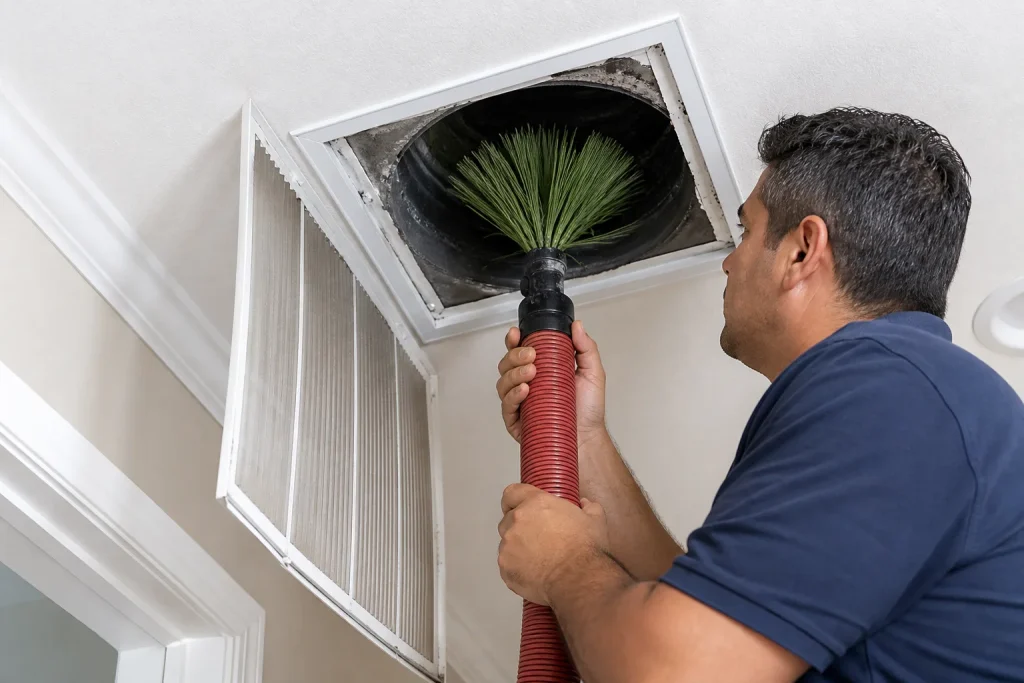
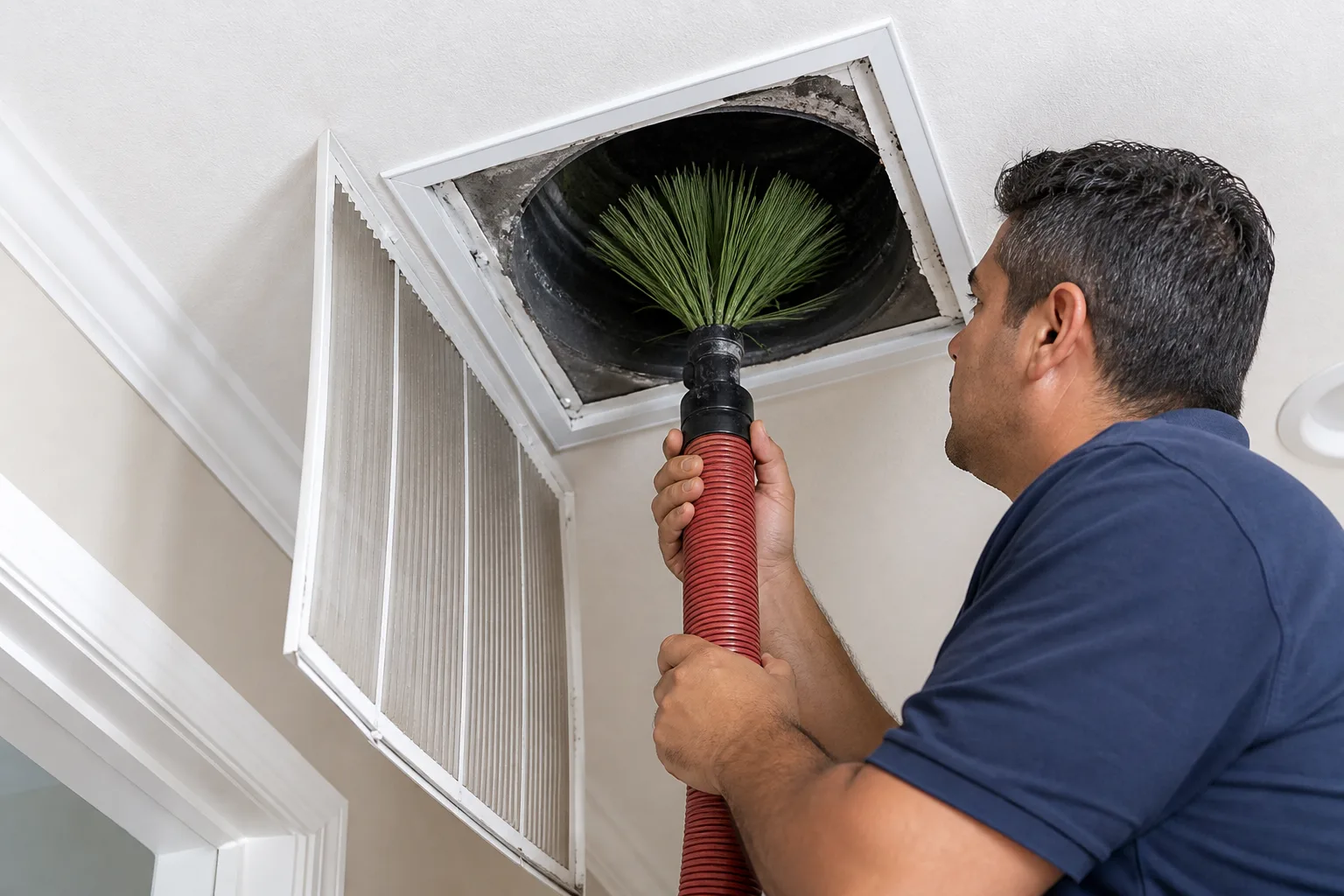
Here’s where the equipment question gets real for a homeowner. Standard air duct cleaning equipment, even professional-grade Duct Cleaning South Gate rotary brush systems, works by agitating debris off duct walls and vacuuming it into a collection system. That’s the right approach for routine dust, pet hair, and construction debris. It is not the right first step for a contamination event.
In an emergency scenario, the concern is that disturbed contaminants, such as mold spores or rodent particulates, will aerosolize during the agitation process. If the vacuum side of the equation cannot capture what the agitation side releases, you’ve taken a contained problem and made it airborne. This is where containment equipment matters. Abatement Technologies negative-air machines, the same class of equipment used in mold remediation and restoration work, create negative pressure inside the containment zone. Air is pulled into the work area and exhausted through HEPA filtration, so anything dislodged during cleaning is captured, not recirculated through the home.
Nikro HEPA-rated vacuum systems serve the same principle: the filtration is rated to capture the particulates a routine truck-mount blower would push back into the living space. If you’re interviewing companies for emergency work in South Gate, ask what they’re using to establish negative air before cleaning starts. A company that cannot answer that question, or that says a standard cleaning setup is fine, is not equipped for the job. You can verify equipment by name. Rotobrush, Nikro, and Abatement Technologies are all brands with publicly available specifications. Our approach is “captured, not recirculated,” and we can show you what that means in practical terms before anything is switched on.
The South Gate Resource Chain: Who to Call and in What Order
The order of operations in an emergency changes based on the source of contamination, and South Gate homeowners often get this sequence wrong because the first company they reach tells them they can handle everything. Here’s the sequence that avoids liability problems and keeps the scope tight.
First, stop the water or remove the source. If a pipe is still leaking, call a plumber first. If a roof penetration is active, get a roofer or building repair company involved. There is no point cleaning ducts while the source is still adding water to the system.
Second, get a real inspection of the air handler and duct runs. This is where a duct specialist with a scoping camera earns its place. The technician is looking for standing water, visible contamination, and the boundaries of the affected area. This determines whether you need targeted remediation or whole-system cleaning.
Third, containment and cleaning happen together. A properly equipped company sets up negative air before agitation begins, cleans the affected runs, and verifies the result. If the system has water damage to the duct board or flex runs, repair or replacement may be needed. We repair ducts, not just clean them, and that matters when a contamination event has compromised materials.
Fourth, address the air quality systems. If the home has whole-home filtration, such as a Honeywell or Aprilaire unit, it needs to be checked after the cleaning. A contaminated system that feeds a damaged filter housing is still compromised. The filter media may need replacement, and the technician should verify the filtration unit isn’t holding particulates that will re-enter the airstream.
The mistake we see in the South Gate area is skipping the inspection step because a generalist company says they can “clean it out” with a standard setup. If the system is contaminated, that misses the containment requirement and makes the problem worse. If the system isn’t actually contaminated, it might be an unnecessary procedure. Either way, inspection before agitation is non-negotiable.
Urgent But Not Emergency: When You Can Slow Down
Some situations feel like emergencies but aren’t, and knowing the difference saves you from overpaying for rushed work that doesn’t require containment. A post-renovation house with drywall dust in the registers is an urgent cleaning need, not a contamination event. The system should be cleaned soon because construction dust shortens blower motor life and clogs coils, but running the HVAC in the meantime isn’t spreading mold or rodent waste.
A system that smells stale when the AC starts, but has no evidence of water damage or pest activity, is a maintenance issue. The mustiness may be damp coil condensation or accumulated dust that has absorbed humidity. The solution is a thorough cleaning of the full air pathway: supply and return ducts, the blower cabinet, and the coil if accessible. This kind of work benefits from our Rotobrush rotary brush systems, which physically agitate the duct walls rather than just vacuuming the center of the run.
Similarly, a dryer that takes forever to dry clothes is a genuine fire-safety concern, and dryer vent cleaning should be scheduled promptly. But it’s not a duct-cleaning emergency in the air handler sense. The dryer vent is a separate run, and the right response is scheduling the vent cleaning rather than shutting down the whole HVAC system. This distinction matters because it determines how fast you need a technician on site and what that technician must be carrying when they arrive.
What We Look For When We Scope an Emergency System
When we arrive at a South Gate home for a suspected contamination event, we’re not there to start cleaning right away. The first tool out is a scoping camera, not a vacuum hose. We look at the interior of the return plenum, the transition to the air handler, and the supply trunk. We’re looking for visible growth, moisture beading, rodent droppings, nesting debris, or soot distribution patterns.
Then we look at the air handler itself: the blower wheel, the coil, the filter housing. On systems with whole-home filtration, whether it’s a Honeywell media cabinet or an Aprilaire unit, we check the seal and the condition of the media. A system with a compromised filter is pulling unfiltered air into the coil, and that changes the cleaning scope.
We’re also honest about what we can’t determine visually. If moisture readings suggest saturation inside a duct run but we can’t see it from the access points, the next step might be opening a section of duct. That’s a repair conversation, not a cleaning conversation. South Gate houses built in the 1950s and 1960s often have hard-pipe runs that are accessible through the crawl space or the attic; newer homes use flex runs that may need replacement rather than cleaning if contaminated. Part of the expertise is knowing when a duct is salvageable and when it’s a liability.
When to Call a Pro
If the system is off, you’ve documented what you can, and the source of the problem is stopped, call a professional before doing anything else. Do not open the air handler cabinet yourself. Do not remove a section of duct to “get a look.” Disturbing the system without containment in place increases the risk of aerosolizing whatever is in there, and it complicates the insurance claim picture because a homeowner who opens the system is now part of the cause chain.
Call (855) 925-0879 and tell us what happened, in what order, and what you’ve already done. We’ll tell you whether you need immediate dispatch or whether you can schedule for the next opening, Sunday through Friday, 7am to 7pm. The estimate is free, and if we come out, the price is set per job in the written estimate before any work begins. We don’t do per-vent pricing, and we don’t upgrade the scope after we show up. What we agree to in writing is what you pay.
For South Gate homeowners dealing with a contaminated system, our air duct cleaning service includes the containment and HEPA capture sequence described above. If the issue is a clogged vent posing a fire risk, dryer vent cleaning is a separate, focused service. And if the ductwork itself is damaged or leaking, air duct repair addresses the root cause rather than masking it. You can also read more about our service area on the South Gate page.
The Bottom Line
The wrong first move in a duct emergency is running the fan. The right first move is shutting the system down, documenting what you see, and calling someone who will inspect before they clean. In South Gate, where AC runs hard through long warm seasons, a contaminated system left running distributes whatever is in the plenum into every room. If you’re dealing with water intrusion, rodent presence, or smoke residue, the cleaning company you call needs containment equipment on the truck, not just a vacuum and a long hose.
If you’re in South Gate and need help, Duct Cleaning South Gate offers free estimates. Call (855) 925-0879. We answer 24/7. Fast dispatch from 7am to 7pm, Sunday through Friday.
Frequently Asked Questions
An emergency means contamination: water exposure, rodent presence inside the plenum, or smoke residue in the system. A scheduled cleaning handles dust, pet hair, and normal buildup. If you’re unsure, shut the system off and describe what you see when you call us. We’ll help you place it in the right category.
No. Running the fan after a water event moves moisture and any resulting biological growth through the supply runs and into living spaces. The system should stay off until a technician scopes the air handler and duct interior. Fan-on mode is exactly what distributes the problem.
Contamination events mean the ducts contain particulates you do not want airborne. Agitating them without negative air pressure and HEPA capture releases them into the living space. Abatement Technologies-class negative-air equipment and Nikro HEPA-rated vacuums capture dislodged debris instead of recirculating it.
Photograph the source of the problem, any visible moisture or staining, the return and supply registers, and the air handler cabinet. Note the time you shut the system off and roughly how long it ran after the incident. Documentation helps define remediation scope and supports any insurance claim. Call (855) 925-0879 for guidance on what else to capture.
Written by the team at Duct Cleaning South Gate, serving South Gate since 2013.
Need Air Duct Cleaning Help?
Call Duct Cleaning South Gate - licensed & insured, here with fast help in South Gate.
(855) 925-0879