
Last updated November 4, 2026
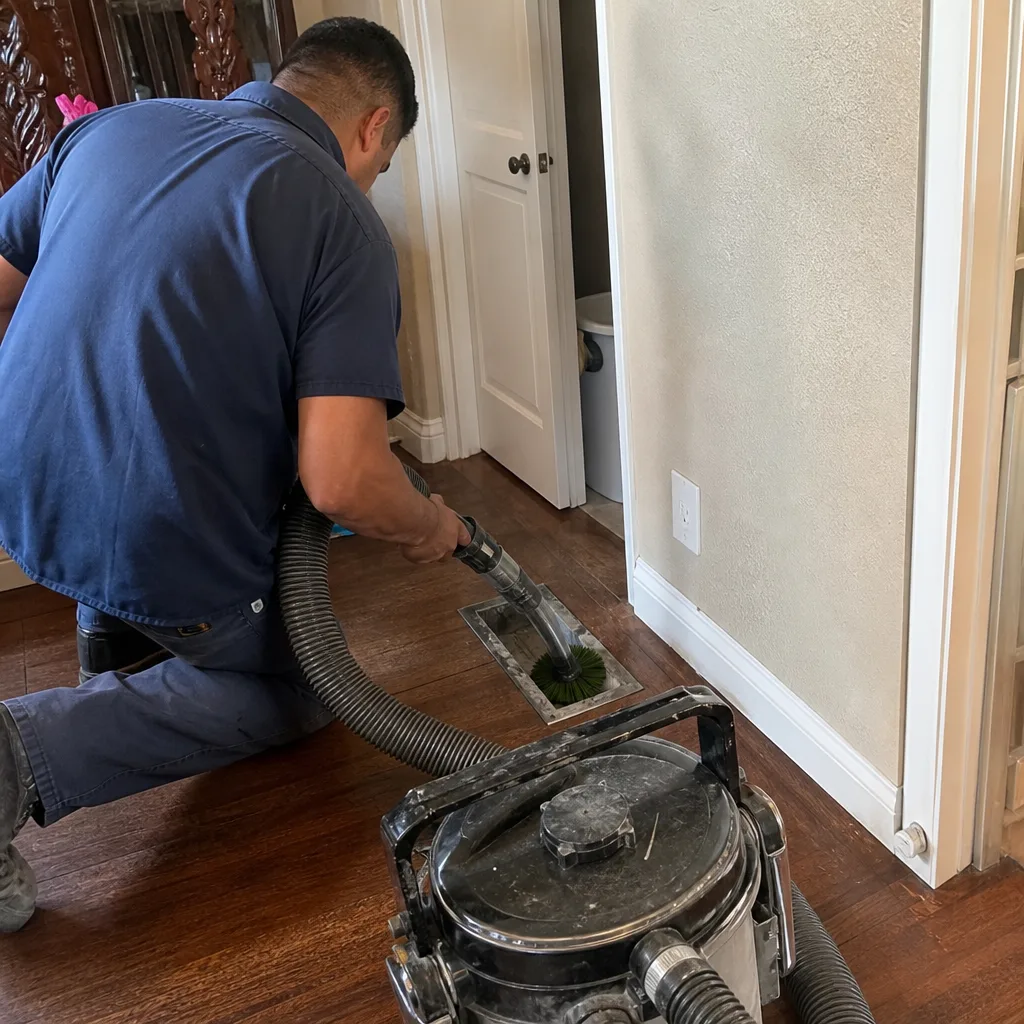
 Whole-home duct cleaning
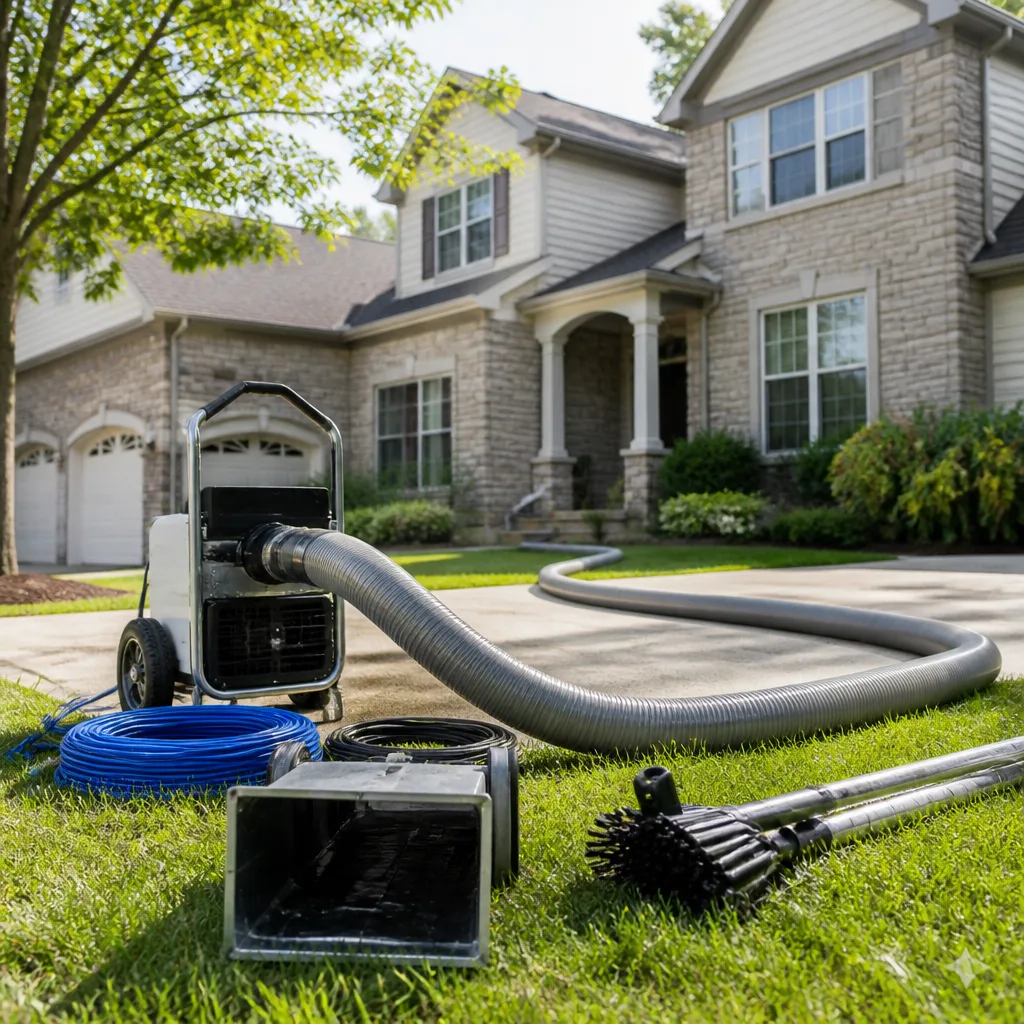
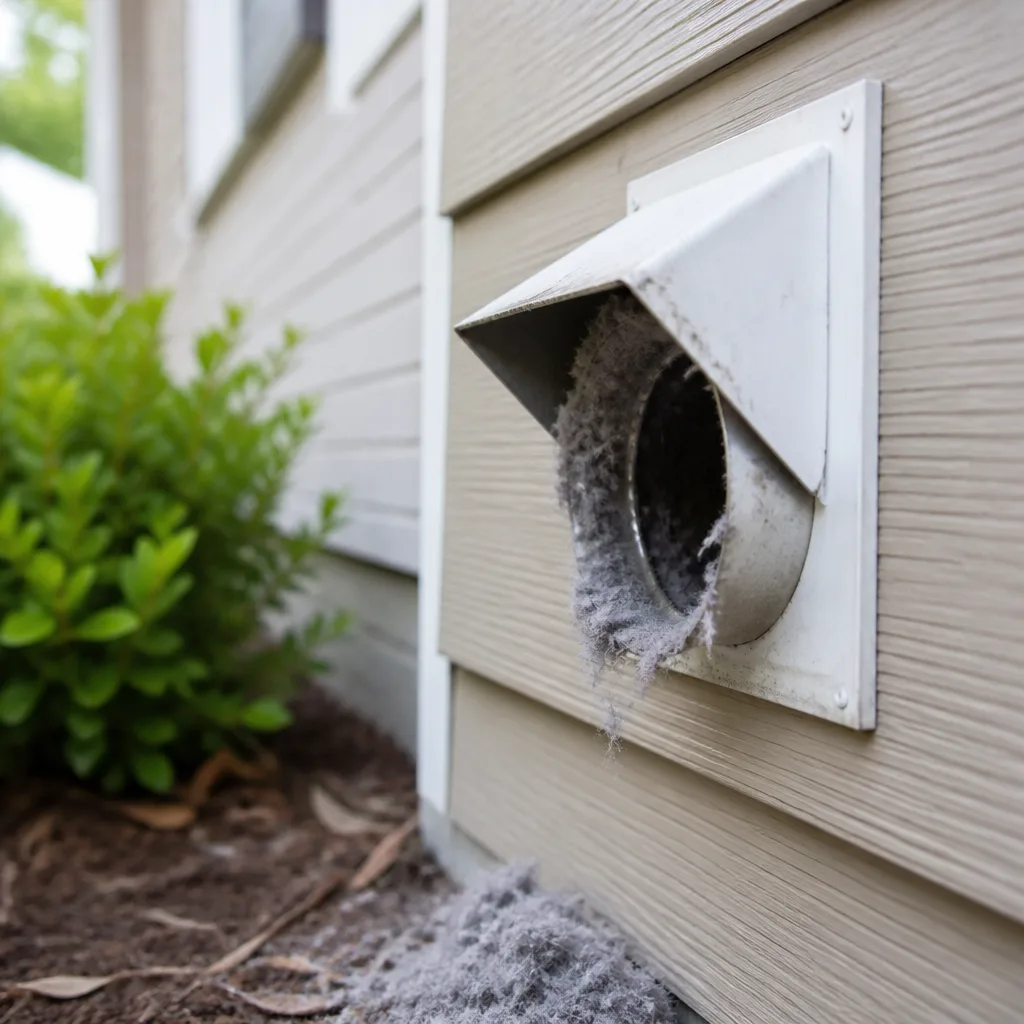 Dryer vent cleaning
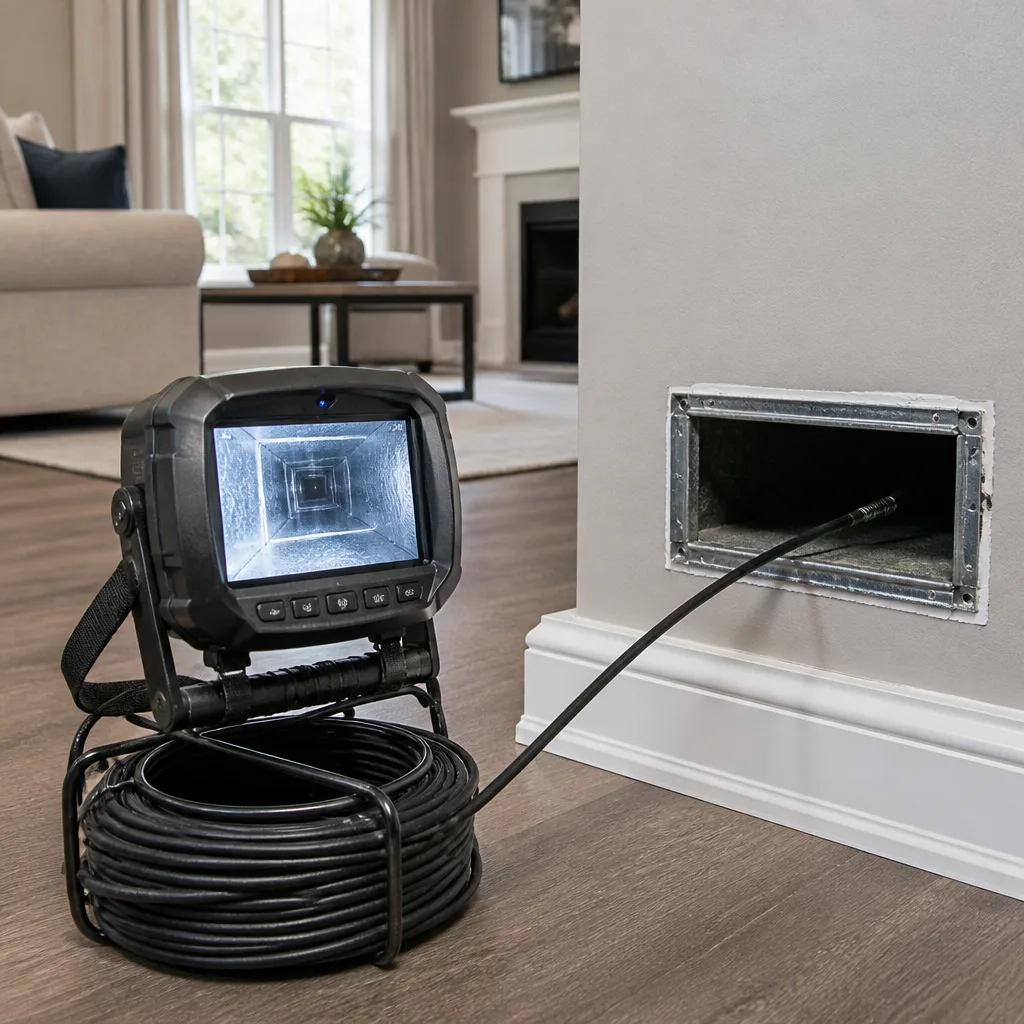 Camera inspection
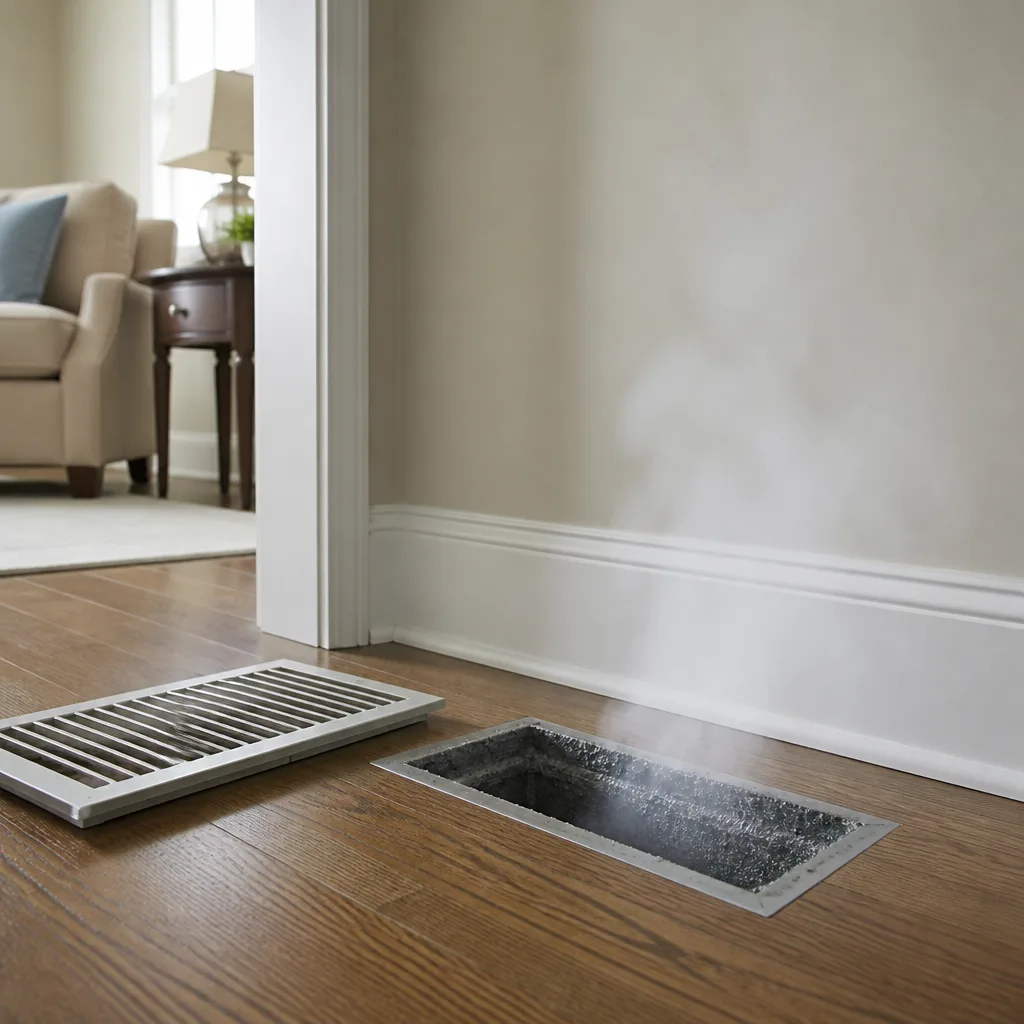 Sanitizing & deodorizing
Whole-system duct and dryer vent check with before-and-after photos - you see exactly what came out of your vents
That "$99 whole-house special" is a bait ad - the real number appears once they are in your hallway, or the "clean" is a shop-vac at the register. We photograph the inside of your ducts before and after instead.
Air Duct Cleaning Warning Signs: A South Gate Homeowner’s Reference Guide
Most homeowners in South Gate miss the earliest warnings of a failing duct system because they’re watching for drama: visible mold colonies, room-clearing odors, dust clouds rolling from registers. Those are late-stage failures. The reliable early indicators are quieter and easier to overlook, because they look like ordinary household quirks rather than system problems. A subtle pressure imbalance between rooms, a utility bill that creeps upward despite identical thermostat settings, a register that stains in a particular pattern. This guide retrains your attention toward those signals. You’ll learn which thresholds matter, which ones don’t, and when a problem belongs to the ducts versus the filter, the dryer vent, or the insulation.
Styles & brands we work with
- Whole-home duct cleaning
- Dryer vent cleaning
- Camera inspection
- Sanitizing & deodorizing
Quick Answer
The most reliable early warning signs of air duct problems in South Gate are not odors or visible mold but measurable system behaviors: rising electricity use during comparable weather, rooms that hold temperature differently, registers that show black streaking or brown staining, and a dusty smell that appears only at startup and fades within a minute. Any one of these justifies an inspection. Several together make air duct cleaning the logical next step before the problem becomes expensive.
Table of Contents
- The Utility Bill Baseline Method
- Room Pressure Imbalance as an Early Indicator
- Musty on Startup vs. Burning Dust: What Each Smell Means
- Register Discoloration Patterns: Gray, Black, and Brown
- When Pets and Allergies Point to Ducts, Not Filters
- How South Gate’s Climate and Housing Stock Shape Duct Wear
- Common Mistakes to Avoid
- When to Call a Professional
- Frequently Asked Questions
- The Bottom Line
The Utility Bill Baseline Method
A 15% increase in monthly electricity cost during weather comparable to the same month last year is a stronger signal of duct system restriction than anything you’ll smell or see. The catch is that most homeowners never isolate weather from system performance. A hot July raises cooling load. A cool July lowers it. You cannot compare raw dollars across seasons and draw any meaningful conclusion. The fix is a simple normalization: track kilowatt-hours per degree-day.
Degree-days measure how far the outdoor temperature sits from 65°F, the point where most South Gate homes need neither heating nor cooling. A day averaging 85°F counts as 20 cooling degree-days. A day averaging 75°F counts as 10. Divide your monthly kWh by the month’s total cooling degree-days, and you get a figure that means the same thing in a mild April as in a hot August.
How to Calculate Your Own Baseline
- Pull 12 months of electric bills showing monthly kWh usage. Southern California Edison provides this online for most South Gate residents.
- Find the cooling degree-day total for each month from a local weather data source. The National Weather Service publishes this for the Los Angeles basin.
- Divide monthly kWh by monthly cooling degree-days. Skip months with fewer than 5 degree-days; the math gets noisy.
- Compare the same month across years. A July figure of 22 kWh per degree-day in 2024 against 19 in 2023 is a 15.8% increase.
- If the increase persists for two consecutive months with no appliance changes, the restriction is likely in the air pathway, and in most South Gate homes that means the ducts.
The HVAC system compensates for restricted airflow by running longer to hit the same thermostat setpoint. The compressor and blower consume electricity the entire time. The result is a quiet, compounding inefficiency. Duct restrictions from accumulated debris typically develop over three to five years, and the utility-bill signal usually appears four to six months before any odor or visible indicator becomes obvious. That window is your cheapest moment to act.
This is where our equipment matters. When we clean ducts, we use Rotobrush rotary brush systems that agitate and extract debris from the duct walls, not just vacuum the center of the duct. A system left with wall deposits re-restricts quickly, and the utility bill climbs again.
Room Pressure Imbalance as an Early Indicator
Your home’s air delivery depends on a balance: every cubic foot of air pushed into a room needs a path back to the return. When supply ducts clog or return ducts obstruct, that balance breaks. Rooms go positive or negative relative to the rest of the house. The symptom is subtle: doors that drift open or closed on their own, a whistle at the base of a closed door, a bedroom that always runs five degrees warmer despite a fully open register. These are pressure problems, and pressure problems are duct problems.
You can test this with a dollar bill. The method takes about five minutes and costs nothing.
The Dollar Bill Test
- Turn the HVAC fan to “on” at the thermostat, not “auto.” This keeps air moving without the compressor cycling.
- Open the door of the room you suspect by about one inch.
- Hold a crisp dollar bill by one short edge and lower it into the gap between the door and the jamb.
- Watch the bill. A slight pull toward the room means the room is positive: supply air is coming in faster than return air can leave. A push away means negative: the room is starved for supply or its return path is blocked.
- Move through every room with the door closed. Compare the strength and direction of the movement.
A mild pull is normal in homes with central returns. A bill that snaps hard against the jamb or holds fast at 30 degrees is not. It means the blower is fighting a restriction somewhere, and the air that should be delivered is taking the path of least resistance: leaking into unconditioned space, backdrafting through the wall cavity, or stagnating in the far end of a supply trunk.
In our experience in South Gate homes, the most common cause of pressure imbalance is a return-side restriction that has been developing for years. Return ducts are often forgotten because they’re hidden and never blow dust at anyone. They collect the same debris as supplies, and they narrow the same way. The fix is Duct Cleaning South Gate‘s full-pathway scope: supply and return, not just registers. That distinction alone separates a real cleaning from a register wipe-down.
Musty on Startup vs. Burning Dust: What Each Smell Means
Two distinct startup smells get reported to us constantly in South Gate, and they point at two different problems. It’s worth treating them separately, because one is biological and one is mechanical.
A musty smell that appears when the fan starts and fades within 60 seconds usually means microbial growth on the coil or in the first few feet of the supply plenum. Here’s the sequence: during cooling, the evaporator coil condenses water. When the system shuts off, that moisture sits in a dark, cool chamber, which is exactly where mold and bacteria want to live. The fan, on restart, carries a pulse of that biological odor into the living space before the coil warms and drys enough to stop off-gassing. The timing is the diagnostic clue. If the odor arrives immediately and dissipates within a minute, the source is near the coil. If it persists while the system runs, the growth has spread further into the ductwork.
Burning dust has a completely different signature. It’s sharp, acrid, slightly electrical, and it appears on the first heating cycle of the season after months of cooling-only operation. Dust settles on the heat exchanger and heating elements. When the furnace or heat pump strips ignite after a long idle, that dust bakes off. It’s a one-time smell, not a recurring one. Recurring burning dust means fine particulate is passing the filter and re-depositing on the heat source every cycle, which is a filtration bypass problem, not a cleaning problem.
The two odors require different responses. Musty-on-startup points to biological activity and argues for professional evaluation with containment. Burning dust points to filter inefficiency, which we address by checking the filter rack’s seal and recommending the right MERV rating for your system while we’re already in the ductwork. If you have a Honeywell media filter cabinet or an Aprilaire filter system, we check that the filter is seated correctly and that no air is bypassing the element.
Register Discoloration Patterns: Gray, Black, and Brown
Register staining is one of the few visual indicators that reliably separates normal operation from genuine problems. The key is the color and the pattern, not just the presence of discoloration.
Gray dust evenly coating the register face is normal accumulation. That dust is mostly dead skin cells, fabric fibers, and tracked-in soil. It settles anywhere air moves slowly. A gray film that appears over weeks or months tells you the filter is doing its job and the duct is passing clean air. Clean it with a damp cloth and move on.
Black streaking in a narrow band along the edge of the register, directly in the airflow path, indicates filtration bypass. The dark color comes from fine particulate: soot from cooking, candle residue, outdoor vehicle exhaust drawn in through leaky return ducts. It concentrates because air accelerates through the register gap and deposits the smallest particles at the edge of the opening. This pattern means unfiltered air is entering the system somewhere upstream, which is a leakage and filtration issue. It responds to duct sealing and to correcting filter fitment, and it’s exactly the repair work we do as part of air duct cleaning when the inspection finds it.
Brown staining, especially when it spreads outward in a water-mark pattern or appears on the ceiling around the register, is moisture intrusion. In South Gate, this usually comes from one of three sources: an undersized duct sweating in an unconditioned attic, a bathroom exhaust vented into rather than out of the attic, or a roof leak that tracks along the duct chase. Moisture plus organic dust equals biological growth, and that growth will not be solved by wiping the register. The stained register is the visible end of a problem that runs back into the duct. Containment-level cleaning, the kind we perform with Abatement Technologies negative-air equipment, is the appropriate response, followed by repair of the moisture source.
When Pets and Allergy Symptoms Point to Ducts, Not Filters
Allergy symptoms that track with HVAC runtime, rather than with the presence of the pet, usually point to the duct system. Here’s the diagnostic distinction that most guidance misses.
If someone in the house sneezes in the living room while the dog is on the couch, that’s a pet proximity reaction. If the same person sneezes in the bedroom at 2:00 AM with the door closed, that’s not the dog. It’s airborne allergen being delivered by the system: re-entrained dander from the duct walls, or allergen infiltrating through return leaks, or both. Allergy symptoms that worsen at night or improve away from home are a duct and whole-home air pathway problem more often than a filter problem.
The filter matters, but only for what passes through it. A 1-inch fiberglass filter catching nothing smaller than 30 microns will never address pet dander, which is typically 2.5 to 10 microns, or dust mite allergens, which are even finer. But that same filter is still better than a pleated MERV 13 filter in a rack that doesn’t seal, because the gap lets unfiltered air around the element entirely. We see both failure modes in South Gate homes regularly.
For clients with persistent allergy symptoms and pets in the home, we check three things: the filter rack seal, the return duct leakage rate, and the condition of the duct walls themselves. We work with Honeywell and Aprilaire air-quality systems, which means we assess ductwork performance in the context of whole-home air treatment rather than treating the ducts as an isolated object. If the filter housing is sound but the ducts are loaded with accumulated dander, cleaning moves the needle. If the ducts are clean but the filter bypasses, an upgrade does more than any number of cleaning passes. Getting that diagnosis right is the service.
How South Gate’s Climate and Housing Stock Shape Duct Wear
South Gate’s inland Los Angeles basin climate shapes duct contamination in ways that differ from beach communities or desert towns. We get a long cooling season from roughly May through October, and while the temperature rarely spikes as high as the Inland Empire, the relative humidity during our marine-layer mornings gives biological growth a regular foothold. That means coils that sit wet for part of most summer days, and ducts that carry humid air into unconditioned attics where condensation happens on the outside of poorly insulated runs.
The housing stock plays an equal role. South Gate has a substantial share of homes built between the 1940s and the 1970s. Those homes tend to have flexible duct or rigid metal duct that has outlived its intended service life, often with loosening joints, failing tape, and returns that were sized for a smaller system than the one now installed. A house that was built with a 60,000 BTU furnace and later got a 3-ton heat pump often has a return that was marginal when new and is now actively restrictive.
That combination, long cooling season, regular humidity, aging ductwork, means that South Gate homeowners should expect duct contamination to develop faster than it does in a dry inland city. Not because anything is wrong with the home, but because the physics are less forgiving here. The good news is that the tools that address it are the same ones that make the diagnosis reliable: Rotobrush agitation, Nikro HEPA filtration, and Abatement Technologies containment. Equipment you can verify by name, applied to the specific conditions of this city.
Common Mistakes to Avoid
- Comparing utility bills month-to-month without normalizing for weather. A cooler July this year versus last year hides a real efficiency decline. Always compare kWh per degree-day, not raw dollars.
- Treating every startup odor as the same problem. Musty means moisture and biology near the coil. Burning dust means particulate passing the filter. The first is a cleaning and moisture-repair issue; the second is a filtration issue. Confuse them and you pay for the wrong fix.
- Assuming a visible gray register film means dirty ducts. Gray dust on the register face is often just household dust settling on a surface. Black streaking and brown staining are the patterns that indicate bypass or moisture. Read the color, not just the presence.
- Closing registers in unused rooms to save energy. In most South Gate homes, this raises static pressure in the supply system, forces more air through the remaining registers, and can worsen leakage in a duct system that is already aging. It does not redirect air the way homeowners expect.
- Upgrading to a very high MERV filter without checking the rack seal. A dense filter in a leaky rack bypasses air around the element and does nothing. The seal matters as much as the rating, and the rating you choose must match what your blower can push against.
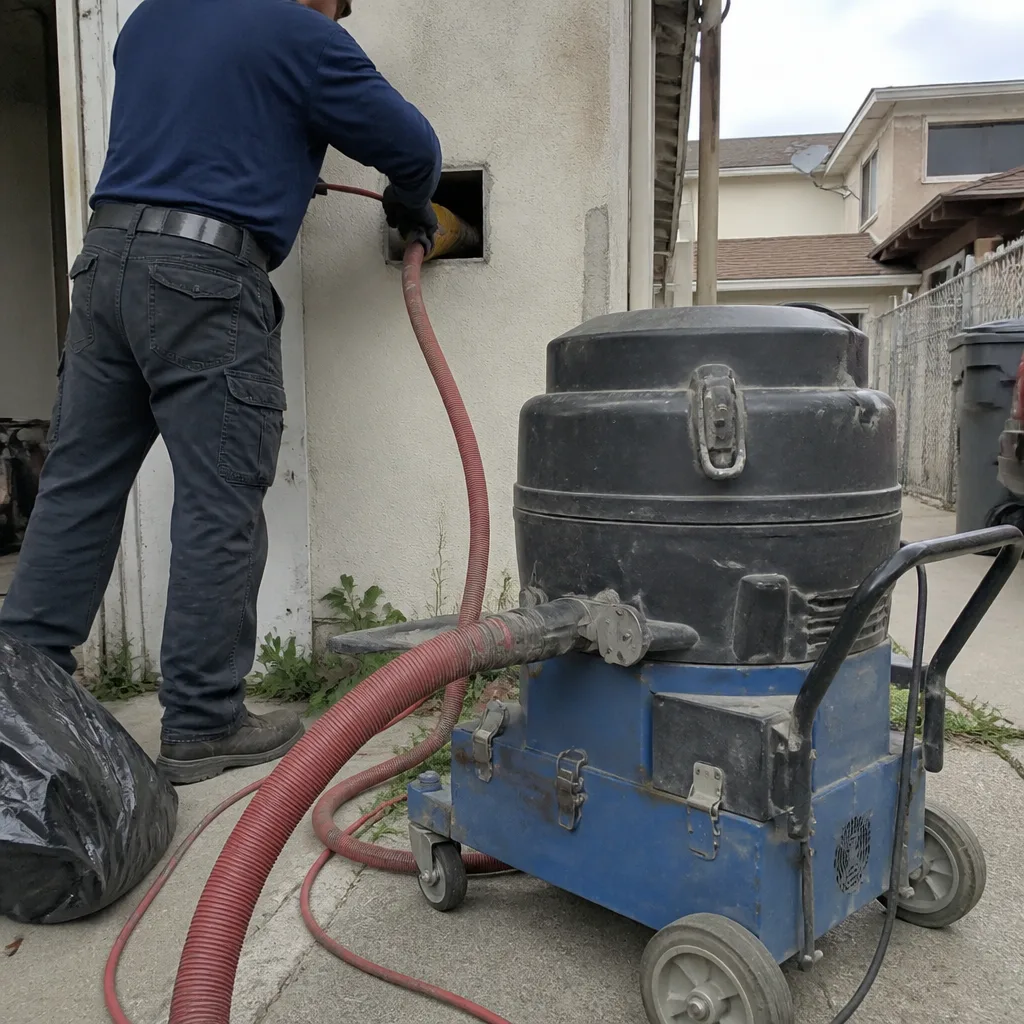
- Ignoring the dryer vent because it’s not part of the HVAC system. The lint that collects in a dryer exhaust is a combustion byproduct risk and a documented fire hazard. It is not the same as duct dust, but it lives in the same conversation about air pathways. Dryer vent cleaning is a fire-safety service, not an add-on, and a clogged dryer vent is a fire risk your HVAC company won’t mention because they’re not looking at it.
- Waiting until the problem smells or shows before acting. By the time an odor is persistent or a register is stained brown, the biological growth or moisture problem is established. The bill-based and pressure-based signals appear months earlier, when the fix is simpler and less expensive.
When to Call a Professional
Call when the dollar-bill test produces a strong pull or push in multiple rooms with the fan on. Call when black streaking appears at the register edge or brown staining spreads across the register face. Call when a musty odor returns every startup, even after you’ve changed the filter. Call when your kWh-per-degree-day figure rises 10 to 15% across two consecutive months with no household changes. Call when allergy symptoms track with system runtime rather than pet proximity. Call when the dryer takes more than one full cycle to dry a normal load. These are not situations where another month of observation helps; they are situations where the problem is already measurable and the path to correction is known. Duct Cleaning South Gate offers free estimates in South Gate – call (855) 925-0879.
Frequently Asked Questions
Residential air duct cleaning in South Gate typically runs between $350 and $900 for a full system, depending on home size, number of returns, and duct accessibility. The written estimate sets the final price before any work begins, and we do not price per vent. The range reflects whether a home has a single return or multiple returns and whether the ducts are rigid metal or flexible. Call (855) 925-0879 for an exact quote – estimates are free.
Cheaper quotes usually mean the scope is registers and first few feet of visible duct, not the full supply and return pathway, and they rarely include containment equipment. A truck-mount blower pointed at a register can create an impressive noise while leaving wall deposits in place. Professional-grade equipment like Rotobrush rotary brush systems and Nikro HEPA filtration costs more to operate, and the price reflects the difference between a cosmetic service and a mechanical one.
Ask for before-and-after photos of the duct interior, specifically of the supply trunk and the return drop. A reputable cleaner will document what the duct walls looked like before agitation and what they look like after extraction. Our process includes those photos on every job because the proof is visible, not promised.
Most South Gate homes benefit from a full cleaning every three to five years, with the shorter interval applying to homes with pets, smokers, recent construction dust, or a long cooling season that keeps coils wet. The interval is a function of how fast the specific home loads its ducts, which the utility-bill baseline method will reveal more clearly than any fixed calendar.
It means the exhaust pathway is restricted. The dryer is generating heat and tumbling, but the moist air has nowhere to go, so the cycle runs long. That restriction is almost always lint accumulation in the vent run or at the exterior termination. The same lint is what makes a restricted vent a fire hazard, which is why dryer vent cleaning is a fire-safety service in our scope, not an afterthought.
Yes, through two mechanisms: restricted airflow reduces cooling across the evaporator coil, which can lead to coil freezing and liquid refrigerant returning to the compressor, and accumulated debris coats the blower wheel, which throws it out of balance and loads the motor bearings. Both conditions shorten equipment life. A duct system that passes air cleanly is a prerequisite for a compressor that runs within its design limits.
It depends on what the system measurements show. If the utility-bill baseline is flat and the dollar-bill test reads normal, the answer is no, not yet. If the pressure imbalance is measurable or the kWh-per-degree-day trend is up, the ducts are telling you something that your nose has not caught up to yet. The measurable signals are the early ones; the odor signals are the late ones.
The Bottom Line
The ducts in a South Gate home speak through the electric bill, the pressure at the door gap, and the color at the register edge before they ever speak through a smell you can name. Learning to read those signals is the difference between a $400 cleaning at the right time and a $4,000 repair or a biological problem later. We repair ducts, not just clean them, and our equipment is what you’d find on a commercial restoration job, Rotobrush, Nikro, Abatement Technologies, applied at residential scale. Professional-grade equipment, residential pricing. Captured, not recirculated. If any of the signals in this guide match what your home is showing you, call (855) 925-0879 for a free estimate. We answer 24/7. Fast dispatch from 7am to 7pm, Sunday through Friday.
Written by the team at Duct Cleaning South Gate, serving South Gate since 2013.
See the difference
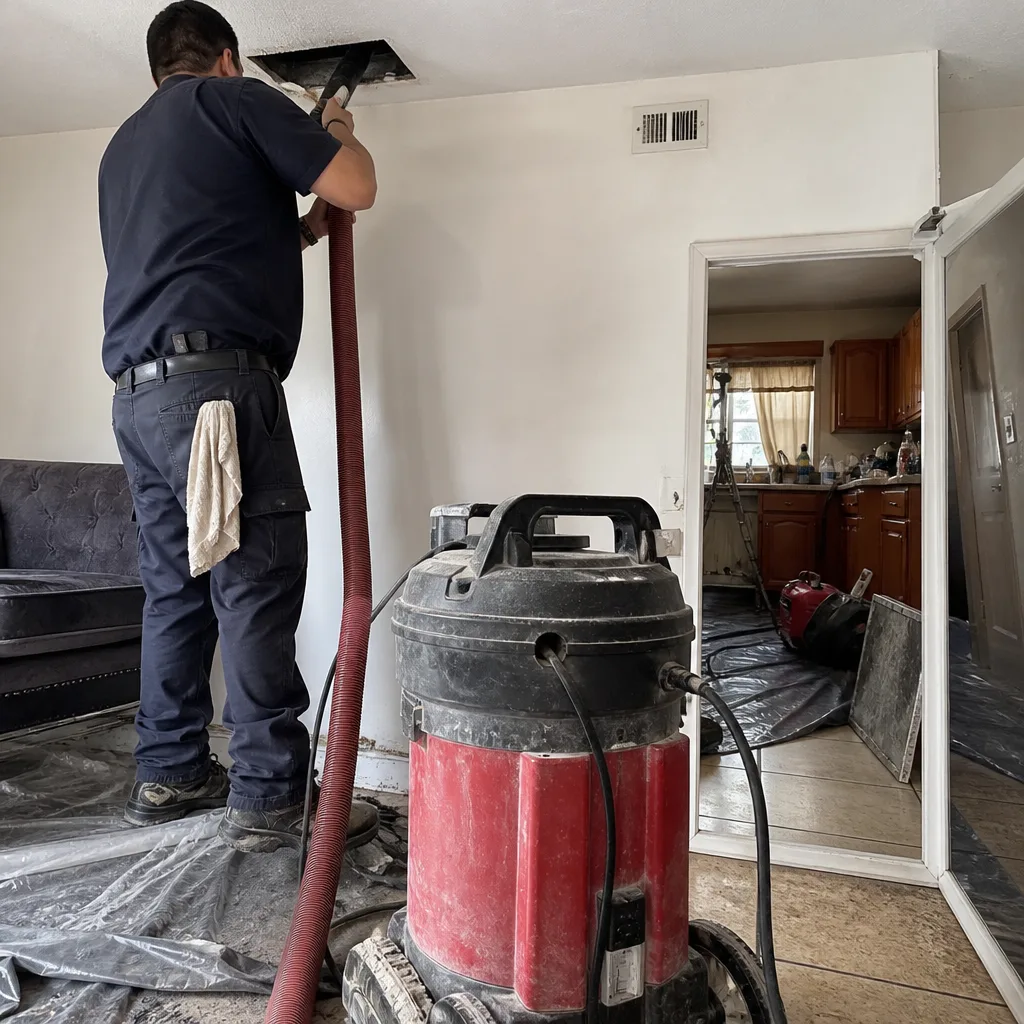 Before
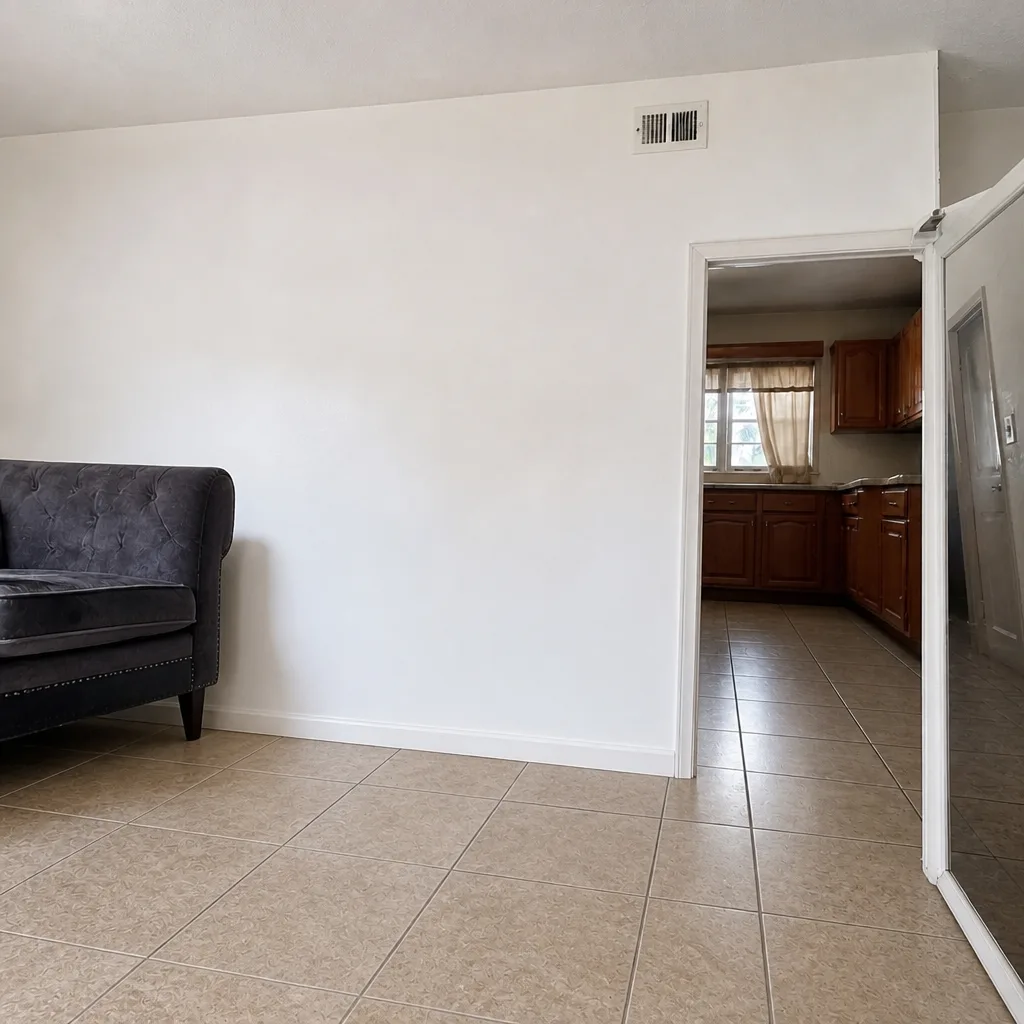 After
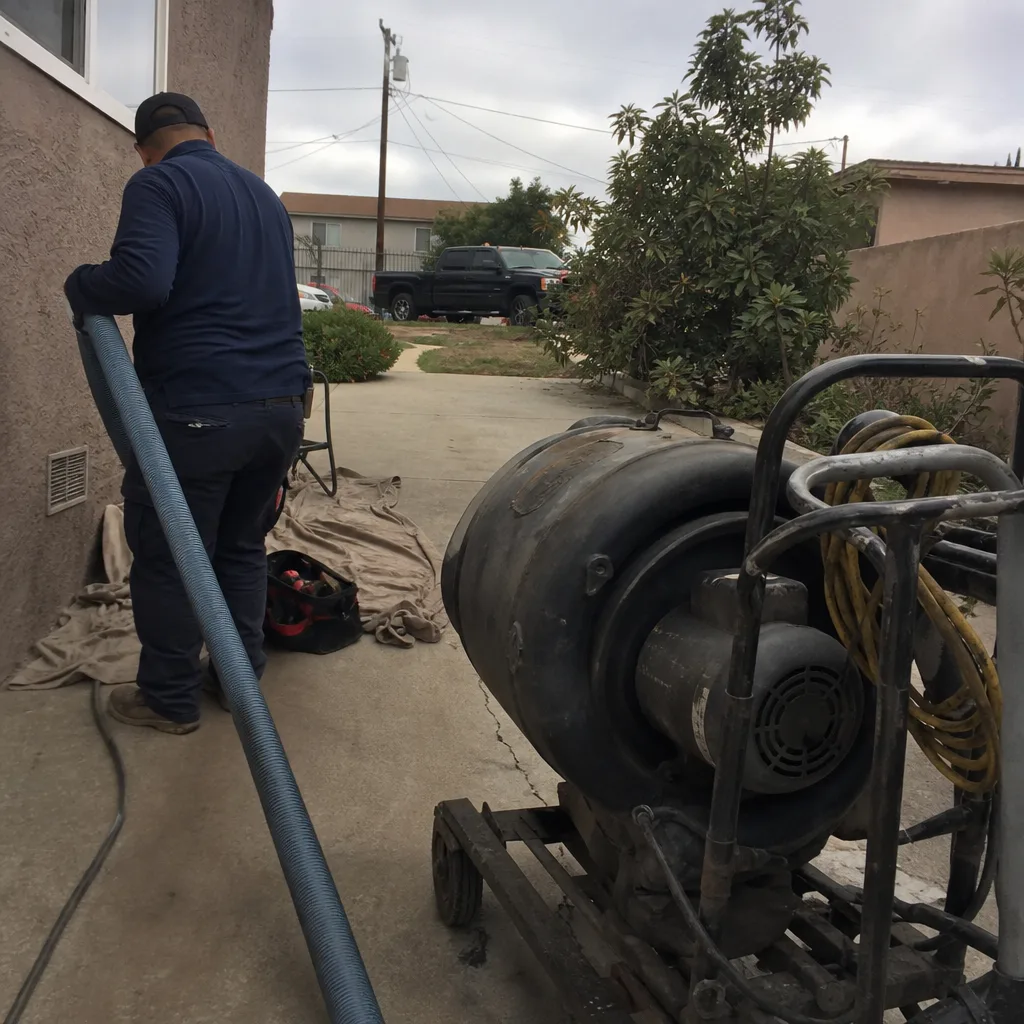 Before
 After
 Before
 After