
Last updated November 4, 2026
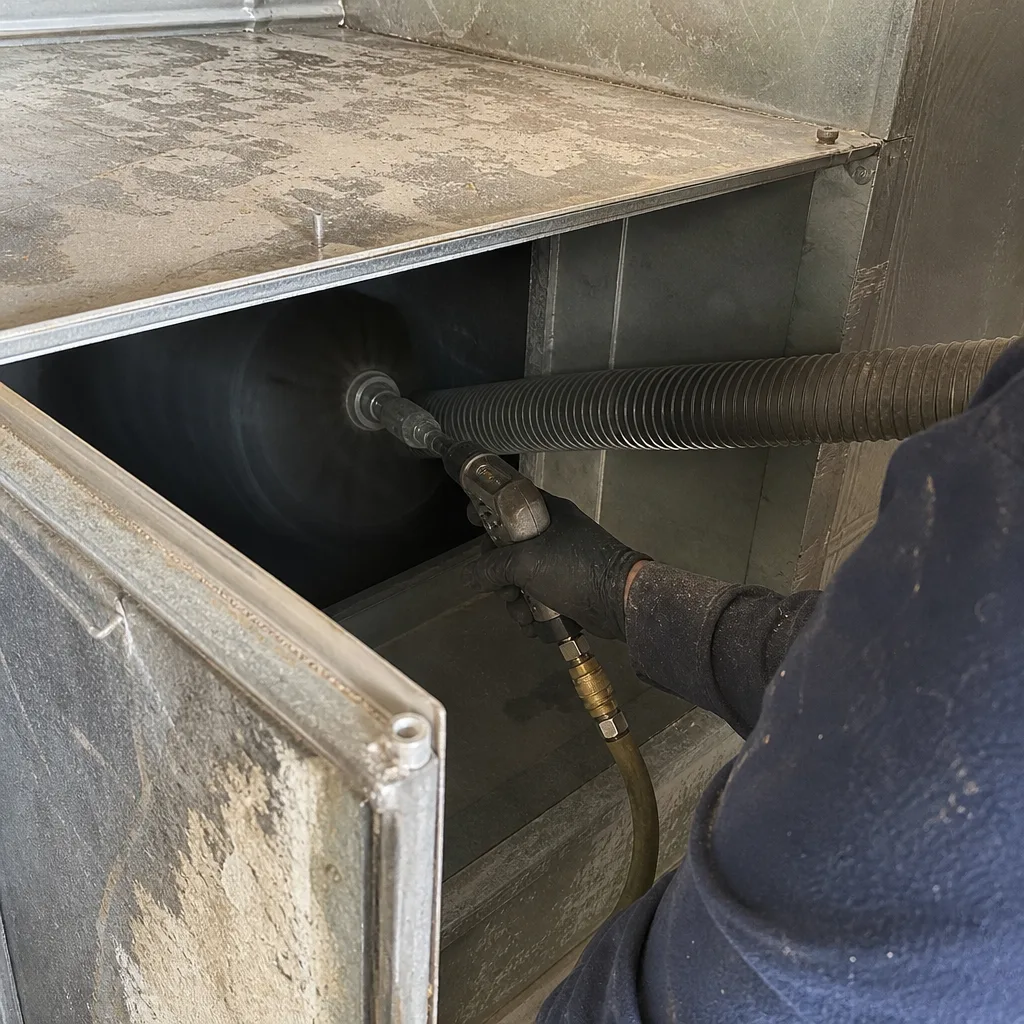
 Whole-home duct cleaning
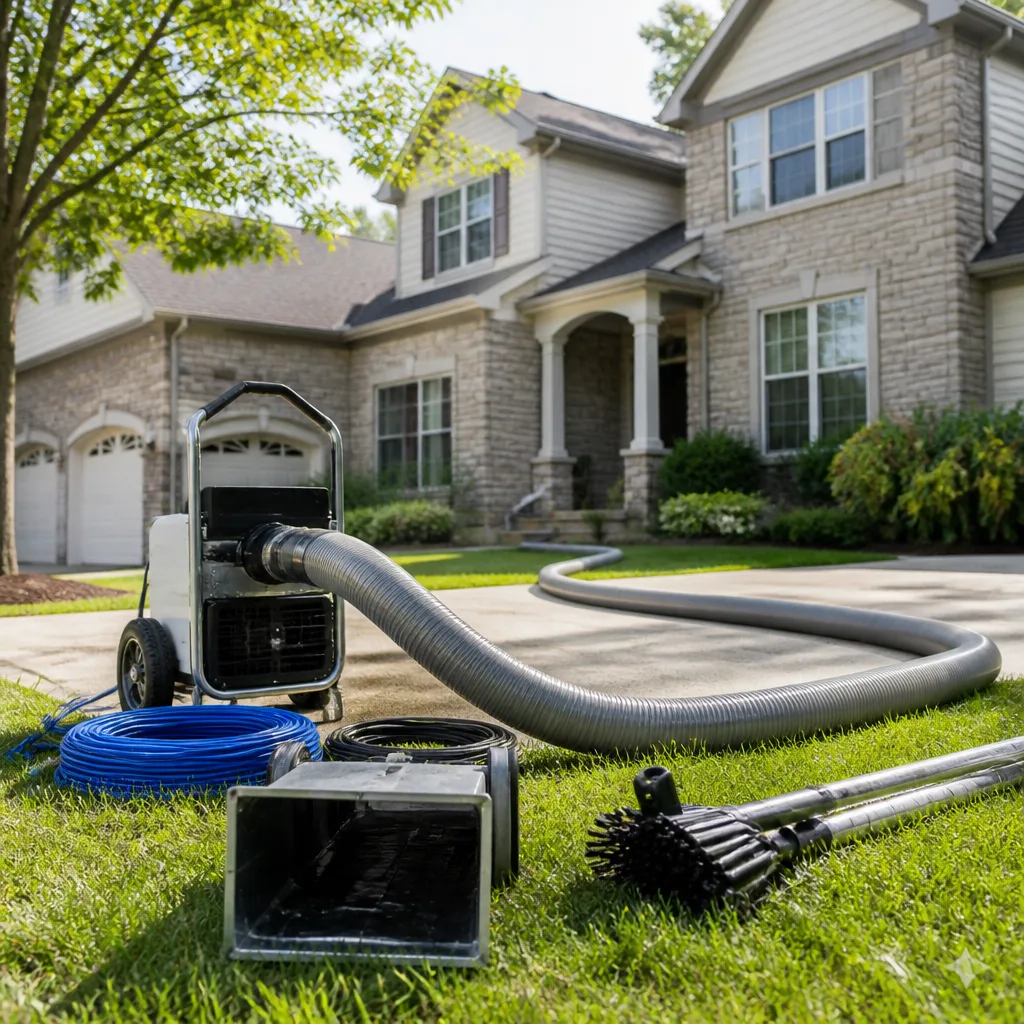
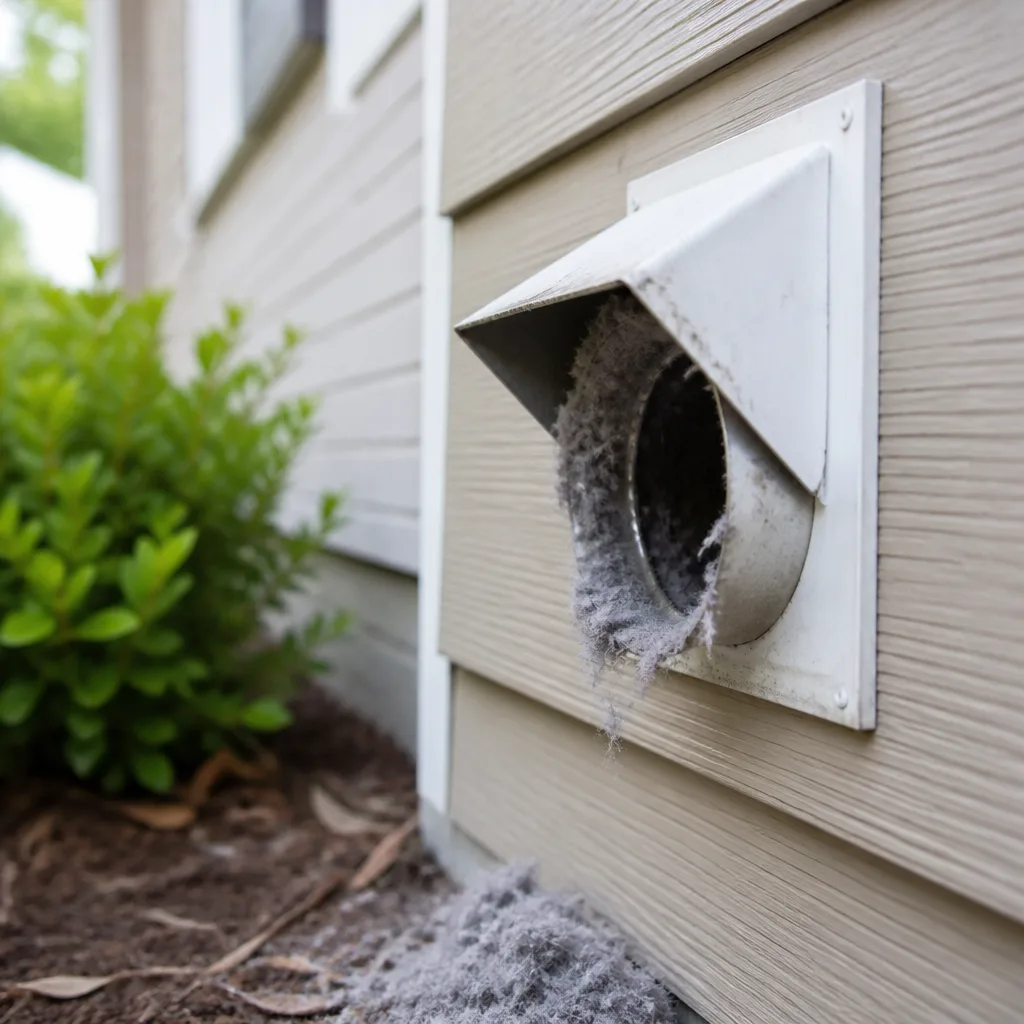 Dryer vent cleaning
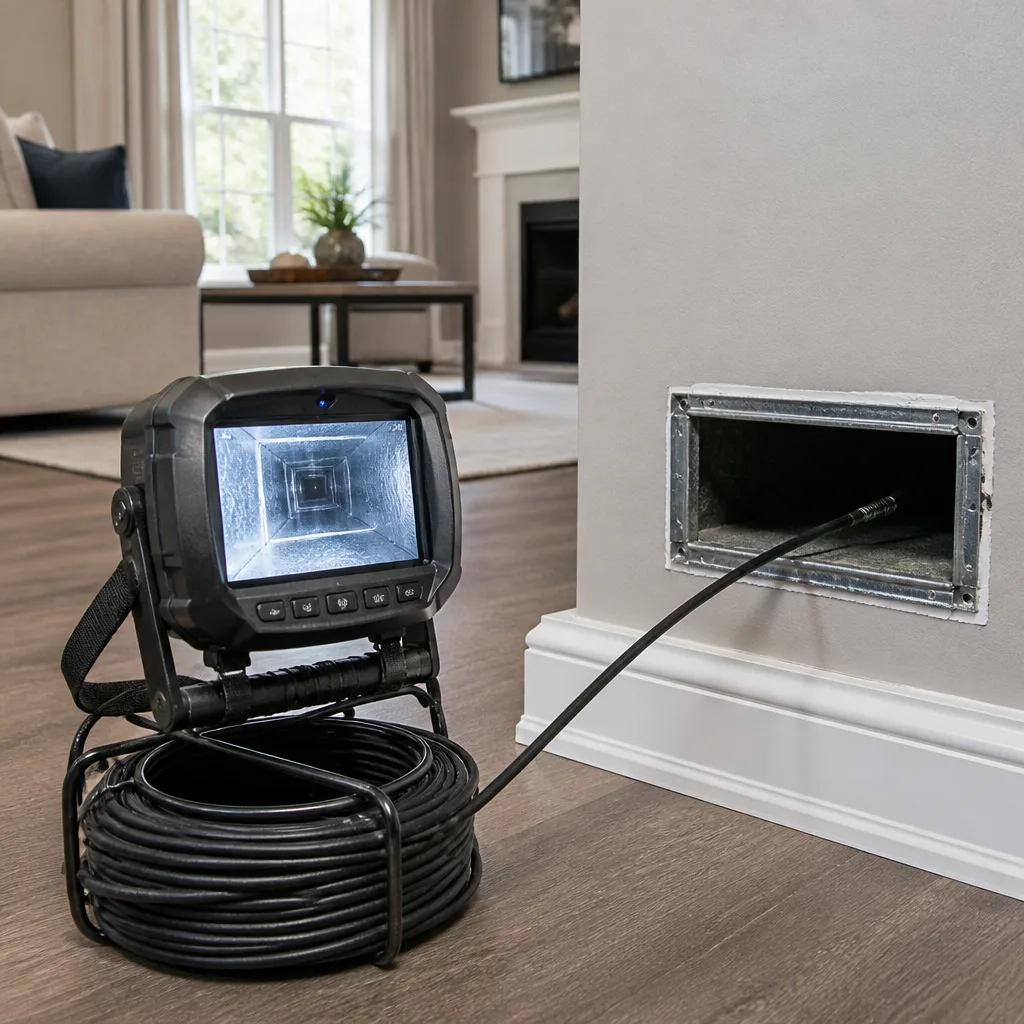 Camera inspection
 Sanitizing & deodorizing
Whole-system duct and dryer vent check with before-and-after photos - you see exactly what came out of your vents
That "$99 whole-house special" is a bait ad - the real number appears once they are in your hallway, or the "clean" is a shop-vac at the register. We photograph the inside of your ducts before and after instead.
Air Duct Cleaning Cost Breakdown: The South Gate Homeowner’s Reference for 2026
The $299 “whole house” duct cleaning quote and the $750 quote for the same South Gate home are not the same service with different margins. They represent fundamentally different equipment classes, different contamination removal rates, and in many cases, different levels of what’s actually being done inside your ducts. Most homeowners walk into this purchase comparing line items on a flier, not mechanical capability. That’s like comparing a garden hose to a pressure washer because both move water.
This guide breaks down exactly what each cost tier delivers at the equipment level, what legitimately drives a quote up in South Gate’s housing stock, what’s often quietly excluded from flat-rate offers, and how to calculate the real annual cost of doing nothing versus doing it right.
Quick Answer
Air duct cleaning in South Gate typically costs between $350 and $900 for a full system, depending on home size, number of returns, and the equipment class the contractor deploys. The price gap reflects fundamentally different contamination removal rates: portable vacuums under $350 remove surface debris from the duct center, while full-source removal with rotary brush agitation and negative-air containment ($600 – $900) extracts debris from duct walls and captures it rather than recirculating it. Call (855) 925-0879 for a free estimate tailored to your home’s specific system.
Styles & brands we work with
- Whole-home duct cleaning
- Dryer vent cleaning
- Camera inspection
- Sanitizing & deodorizing
Table of Contents
- The Three Pricing Tiers Operating in South Gate in 2026
- Line-Item Cost Drivers That Legitimately Add to Base Price
- What Flat-Rate Quotes Typically Exclude
- How South Gate Home Characteristics Affect Price
- The Real Cost-Per-Year Calculation
- Questions to Ask Before Signing a Quote
- Five Misconceptions About Duct Cleaning Pricing
The Three Pricing Tiers Operating in South Gate in 2026
The South Gate market has stratified into three distinct service classes, each with different equipment on the truck and different outcomes inside your ductwork. Understanding this structure is the difference between buying a service and buying a result.
Tier One: Portable Vacuum Cleaning (Under $350)
This is the entry tier. The contractor arrives with a portable vacuum unit, typically wheeled into the home and connected to a hose that runs to your main trunk line. Cutting an access hole, they run the vacuum while agitating what they can reach with basic brushing tools. The system creates negative pressure in one section of ductwork at a time.
What it actually does: Removes loose dust and debris from the center of accessible ducts. It does not effectively dislodge caked-on particulate from duct walls, does not address the return side thoroughly, and typically cannot reach branch runs beyond the first few feet from the main trunk without additional access cuts. Debris not loosened before vacuuming simply remains.
Who it’s appropriate for: A lightly used home with recent duct sealing and a homeowner who changes quality filters on time. For most South Gate homes with years of accumulated dust, pet dander, and construction particulate, this tier leaves significant material behind.
Tier Two: Trailer-Mounted Negative Air ($350 – $600)
The contractor uses a trailer-mounted or truck-mounted vacuum that generates substantially more airflow and suction than portable units. These systems connect to the ductwork through the main trunk and create strong negative pressure throughout the system. Technicians agitate duct walls with pneumatic or manual brushes while the system pulls dislodged material into a collection container outside the home.
What it actually does: Pulls a larger volume of air through more of the system, capturing debris that would otherwise resettle. It can address the return side more effectively and reach further into branch runs. However, agitation quality varies by contractor – some use robust mechanical brushing, others rely on suction alone, which still leaves adhered particulate on duct surfaces.
Who it’s appropriate for: Most single-family homes in South Gate with moderate buildup and no specific contamination concerns. This is the functional middle market, and pricing here should be compared on the basis of what agitation method is actually used, not just the vacuum equipment.
Tier Three: Full-Source Removal with Powered Agitation ($600 – $900+)
This is the remediation-grade approach. The contractor combines trailer-mounted negative-air equipment with a powered rotary brush system – in our case, Rotobrush equipment – that mechanically scrubs duct walls while the vacuum extracts the loosened material simultaneously. The key addition is true source removal: the brush physically abrades adhered dust films, pet dander, and construction debris from duct surfaces, and the air stream carries it into a HEPA-filtered collection system rather than allowing it to settle back or escape into the living space.
What it actually does: Removes what’s actually stuck to your ducts, not just what’s floating in the middle. Nikro HEPA-rated vacuum equipment ensures particulates dislodged during cleaning are captured, not recirculated into living spaces. Abatement Technologies negative-air and containment equipment allows the technician to maintain negative pressure inside the home during the job – a standard borrowed from mold and restoration work – which means debris entering the duct during cleaning exits through the filtration system, not through your living room. This is the difference between “cleaned” and “captured, not recirculated.”
Who it’s appropriate for: South Gate homes with years of accumulated buildup, pet owners, homes where renovation work has occurred, or anyone who wants verification that the system was actually cleaned, not just serviced. The price premium buys mechanical agitation capability, HEPA filtration, and in some cases post-cleaning inspection photography.
Duct Cleaning South Gate operates at this tier with professional-grade equipment and residential pricing. The tool quality gap is real: commercial restoration contractors use Rotobrush and Nikro equipment because it works. Budget duct services use portable vacuums because they’re cheap to transport. Equipment you can verify by name matters when the job is inside your walls.
Line-Item Cost Drivers That Legitimately Add to Base Price
Several factors should add cost to a quote. If a contractor’s price doesn’t change based on these, they’re either absorbing it (unlikely) or not accounting for it in scope (likely).
- Dryer vent inclusion. A dryer vent cleaning is a separate service with separate equipment needs and should be itemized. Your dryer vent is a fire risk your HVAC company won’t mention – national fire safety organizations have documented clogged dryer vents as a leading cause of residential fires, and a duct cleaning quote that quietly folds it in without flagging it as a fire-safety service is doing you a disservice. Expect $75 – $150 added for a proper dryer vent cleaning with access to the exterior termination.
- Mold or microbial treatment. If visible mold growth is present in ductwork or on registers, cleaning alone is insufficient. Treatment with an EPA-registered antimicrobial product like Sporicidin adds material and labor cost. This is not an upsell; it’s a scope change based on what’s actually found. A legitimate quote will separate this as a contingency rather than baking it into the base price.
- Flex duct section replacement. South Gate homes built before the 2000s often have flex duct runs that have degraded, torn, or collapsed internally. Cleaning deteriorated flex duct is pointless – it will re-contaminate immediately. A proper assessment will identify sections that need replacement, typically $15 – $25 per linear foot for material and labor depending on diameter and accessibility. We repair ducts, not just clean them. Air duct cleaning without this assessment ignores the root cause of airflow loss.
- Return plenum access cuts. In many South Gate homes, the return plenum – the large box where return air collects before entering the HVAC unit – is not accessible without cutting an access panel. This is a standard practice requiring sheet metal tools and a patch panel installed afterward. Some quotes bury this in “includes access as needed” language; others itemize it at $75 – $150. Itemization is a sign of honesty, not nickel-and-diming.
- Number of returns. Homes with multiple return drops – common in larger South Gate homes with additions or converted garages – require access at each return point. A two-return home is more work than a single-return home, and the quote should reflect that.
- Access difficulty. Slab-foundation homes in South Gate frequently have HVAC equipment in a central closet or attic with tight clearances. If technicians cannot stand comfortably at the unit while making access cuts, the labor time increases. Attic work in South Gate’s summer months – when temperatures inside attics routinely exceed 110°F – also constrains how long a crew can work continuously, which affects scheduling and labor allocation. This is a legitimate local factor, not a contrived upcharge.
What Flat-Rate Quotes Typically Exclude
The $299 whole-house quote is structured to get a technician into your home. The scope language matters more than the number. Here’s what commonly sits outside a flat-rate quote:
- Branch runs beyond the trunk line. “Whole house” often means “main trunk line and returns we can access from the unit.” Individual branch runs to each room may require additional access cuts at each branch, charged separately.
- The return side of the system. Some flat-rate services clean only the supply side because return ducts carry less visible dust. A proper cleaning addresses both. Ask specifically: “Does this price include supply and return air ducts?”
- The blower fan and evaporator coil. These sit inside the air handler and accumulate the same particulate as your ductwork. Cleaning them is a separate labor line that materially affects airflow after the job. If your quote doesn’t mention them, they’re probably not included.
- Post-cleaning verification. A photo or video walkthrough of finished ductwork, or a post-cleaning inspection, is a deliverable that requires time and equipment. If it’s not in the scope, don’t expect it.
- Antimicrobial treatment. This is almost always a separate line item, triggered by what’s found during the job. If someone includes it in a flat rate without seeing your ducts, they’re either losing money or not actually applying it.
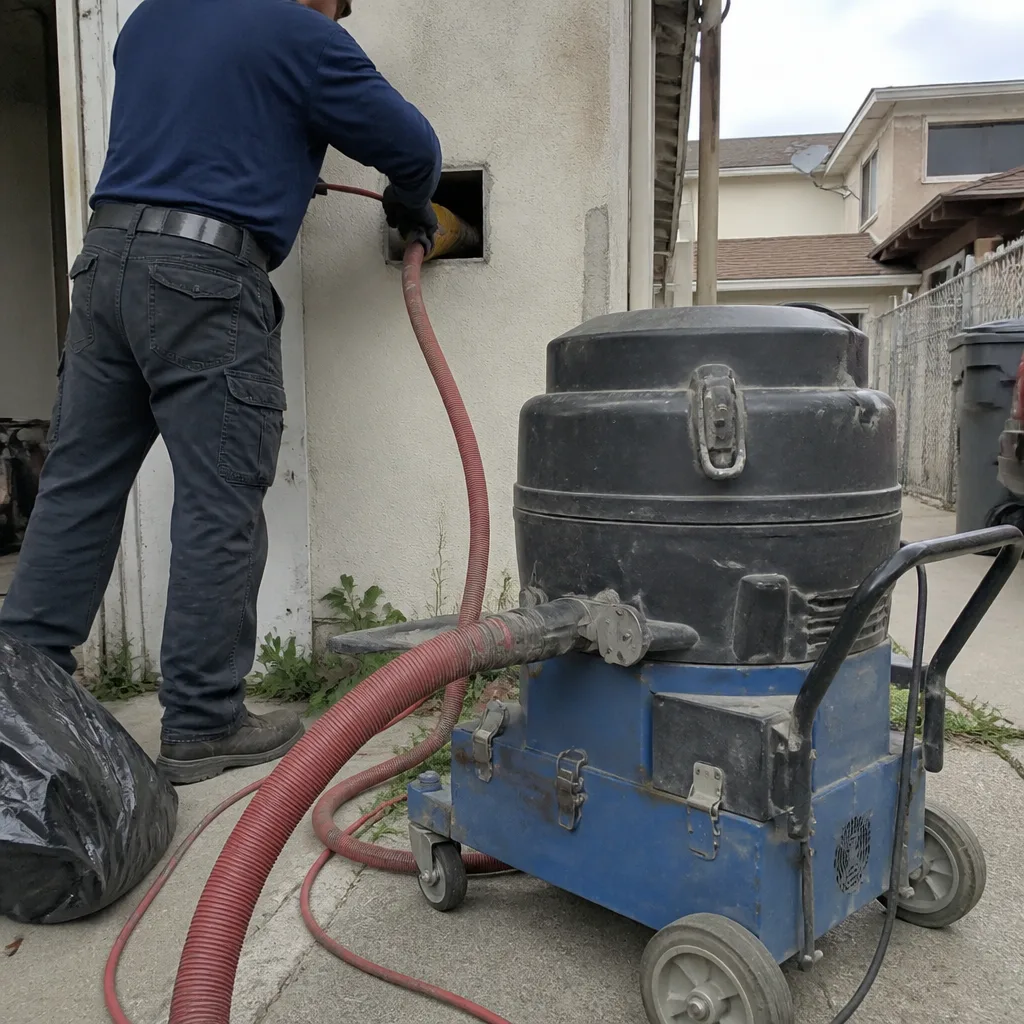
- Dryer vent cleaning. Covered above, but worth repeating: if a duct cleaning company doesn’t itemize the dryer vent separately, they likely aren’t doing a proper job of it. The equipment for dryer vent work – rotary brushes sized for 4-inch vents, not 6-to-12-inch ducts – is different.
How South Gate Home Characteristics Affect Price
South Gate’s housing stock has specific characteristics that influence duct cleaning cost in ways a generic national guide won’t tell you.
Square Footage and Duct Complexity
Most homes in South Gate range from 1,100 to 2,200 square feet, with older homes in the Mid-Cities area running smaller and newer construction in the Hollydale and Southeast neighborhoods running larger. More square footage doesn’t automatically mean more ducts – a 1,400-square-foot home with a single return and simple trunk-and-branch layout may cost less than a 1,200-square-foot home with a converted garage addition and three returns. Ducting complexity, not floor area, is the pricing driver.
Slab Foundation Access Constraints
A large portion of South Gate homes sit on slab foundations, meaning ductwork runs through the attic or in-ceiling soffits rather than a basement or crawlspace. (South Gate has no basements to speak of – the soil and water table don’t support them.) Attic ductwork means access is through ceiling grilles and attic hatches, not through a convenient crawl space under the house. This constrains how easily technicians can reach branch runs and increases labor time compared to crawlspace homes common in other parts of the country.
Attic Temperature and Labor Timing
South Gate’s summer attic temperatures regularly exceed 110°F by mid-morning. A crew working in an attic before 9 a.m. is working efficiently. A crew wrestling duct cleaning equipment in a 120°F attic at 2 p.m. is working slowly and sweating through safety concerns. This isn’t a reason to avoid summer cleaning – it’s a scheduling reality that explains why some quotes include a modest seasonal labor factor and why some companies prefer morning starts during summer months.
Age of Ductwork and Return Design
Homes built in South Gate’s post-war boom through the early 2000s often have duct systems that were never designed with cleaning access in mind. Return air paths may be through wall cavities or stud bays rather than dedicated duct runs, which are essentially impossible to clean. Older homes may have asbestos-wrapped duct sections, which require special handling and may stop a job until remediation occurs. A legitimate company will flag these conditions during the estimate, not discover them mid-job.
The Real Cost-Per-Year Calculation
Framing duct cleaning as an isolated expense misses the point. The question isn’t “what does this cost?” – it’s “what does this cost per year of clean air and efficient HVAC operation?”
What You’re Actually Buying
A full-source removal cleaning at $700 on a typical South Gate home, performed every three to five years, works out to $140 – $233 per year. Against that:
- Filter waste. A home running a system with dirty ducts loads its filters faster. If dirty ducts shorten a $15 filter’s life from 90 days to 30 days (a typical degradation on a dirty system), that’s $120 extra in filters annually. The cleaning partially pays for itself in filter savings alone.
- Energy penalty. A system moving air through a dirty evaporator coil and debris-laden ducts works harder. The Department of Energy has documented efficiency losses from dirty HVAC components for decades, and while exact percentages vary, a dirty coil consistently raises energy draw. In South Gate’s climate, where air conditioning runs from May through October, even a modest efficiency recovery matters.
- HVAC repair risk. The most expensive line item is compressor failure. When airflow is restricted by buildup, the evaporator coil gets colder, the refrigerant doesn’t boil off properly, and liquid refrigerant can return to the compressor and destroy it. A $700 cleaning that prevents a $1,800 compressor replacement (minimum, for a basic system) makes financial sense long before you account for anything else.
A Realistic Math Example
For a 1,500-square-foot South Gate home with a 3-ton HVAC system:
- Professional full-source removal cleaning: $700, performed every 4 years = $175/year
- Filter replacement savings from cleaner airflow: $80 – $120/year
- Energy efficiency recovery: $50 – $150/year depending on how restricted airflow was
- Avoided HVAC repair risk: variable, but one compressor replacement saved over 15 years pays for every cleaning you’ll ever buy
On a net basis, the cleaning is close to break-even before accounting for the air quality and fire safety (dryer vent) improvements that are the actual reason to do it. The math works differently for the $299 portable vacuum tier, because the contamination removal rate is lower and the system re-fouls faster. You may pay less per visit but more per year of actual benefit.
Questions to Ask Before Signing a Quote
These questions lock in scope and filter out contractors who can’t answer equipment-level questions:
- “What specific agitation method do you use?” Listen for the words “rotary brush,” “powered brush,” or a specific brand like Rotobrush. If the answer is “we use high-powered suction” without describing what physically removes adhered debris from duct walls, you’re buying vacuuming, not cleaning.
- “Does your vacuum system use HEPA filtration?” Standard vacuums without HEPA filters can exhaust fine particulates back into the home during the job. Nikro HEPA-rated equipment is the standard for a reason – it captures sub-micron particles that basic filters pass through.
- “Does the price include supply AND return ducts?” If the answer is anything other than an immediate “yes,” get it in writing on the quote. The return side is half your system.
- “Will you clean the blower fan and evaporator coil as part of this job?” A proper system cleaning addresses the entire air pathway, not just the duct runs. If the contractor doesn’t mention these components unprompted, ask.
- “How do you access branch runs?” Listen for a clear explanation of access cuts, patch panels, and how they reach individual room feeds. If the answer is vague, they’re probably only cleaning the main trunk.
- “Do you use negative-air containment during the job?” This is the difference between capturing debris and moving it around. Abatement Technologies negative-air equipment maintains containment-level negative pressure, which is the same approach used in mold remediation and restoration work. A contractor who can’t answer this question doesn’t use it.
- “Can I see before-and-after photos of the work?” A legitimate company documents what it did. A contractor who can’t or won’t show you what the inside of your ducts looked like before and after hasn’t done anything worth paying for.
Five Misconceptions About Duct Cleaning Pricing
Misconception 1: “All duct cleaning is the same, so buy the cheapest quote.”
The equipment gap is real. A portable vacuum and a trailer-mounted negative-air system with powered rotary brush agitation are not comparable services. This isn’t marketing – it’s mechanical capability. Ask any contractor to name their equipment, then look it up. Rotobrush and Nikro are verifiable commercial-grade brands. A contractor running budget equipment either can’t name what they use or ducks the question. Equipment you can verify by name is the difference between a service and a result.
Misconception 2: “The EPA says duct cleaning is unnecessary.”
The EPA has taken a cautious position on duct cleaning, but it’s important to read the actual guidance: the agency says duct cleaning has not been shown to prevent health problems and that it’s not a routine maintenance item for every home. What the EPA does acknowledge is that cleaning is warranted when ducts are visibly contaminated, when there’s evidence of mold growth, or when ducts are infested with pests – which describes a meaningful share of South Gate homes with 20-plus years of accumulated particulate.
Misconception 3: “A $299 special includes everything I need.”
South Gate homeowners who called flat-rate specials typically discover that the advertised price covered only a portion of the system, and the final invoice landed near or above what a transparent full-scope quote would have been from the start. The bait-and-switch reputation exists in this industry for a reason: low teaser prices that become larger invoices once the van is on the drive. A legitimate quote from a company like Duct Cleaning South Gate gives you one flat price per system agreed before work starts, with scope spelled out in writing.
Misconception 4: “Duct cleaning is a once-in-a-lifetime expense.”
Ductwork re-contaminates as long as air moves through it and people live in the home. The National Air Duct Cleaners Association (NADCA) recommends cleaning every three to five years for most homes, more frequently for homes with pets, smokers, or recent renovation work. South Gate’s dry climate means particulate tends to stay airborne and settle into ductwork rather than clinging to outdoor surfaces – which is one reason local systems accumulate buildup on a predictable cycle.
Misconception 5: “A proper duct cleaning costs more than it’s worth.”
At $700 every four years, a full-source removal cleaning costs $175 annually. Against filter savings, energy recovery, and repair risk avoidance – detailed in the cost-per-year section above – the net cost is often negative. The homes that most benefit from professional cleaning are the ones where it’s been deferred the longest. South Gate’s older housing stock, with decades of accumulated particulate in systems that were never designed for cleaning access, is exactly the housing profile where professional-grade equipment matters most.
Common Mistakes to Avoid
- Buying on price without asking about equipment. In the South Gate market, the $299 quote and the $700 quote are different equipment classes. Ask what agitation method is used and whether the vacuum is HEPA-rated. If the contractor can’t answer immediately, walk away.
- Not asking about the return side. Many flat-rate services clean only supply ducts. Your return side carries the same air, and leaving it untouched means half the job is undone. Get “supply and return ducts included” in writing.
- Ignoring the dryer vent. Your dryer vent is a fire risk your HVAC company won’t mention. A dryer vent cleaning should be part of or separate from your duct cleaning quote, but it should never be ignored.
- Assuming a low quote means you’re saving money. A portable vacuum service that leaves adhered particulate behind means you’ll be cleaning again in 18 months. Paying $299 twice is worse than paying $700 once for a job that addresses the full system.
- Not asking about access cuts before the job. Slab-foundation South Gate homes often need access cuts in the return plenum or branch runs. Know what’s planned and that patch panels are included before work starts.
- Skipping post-cleaning verification. If the contractor doesn’t offer before-and-after photos or a post-cleaning inspection, you have no way to verify the work was actually done. A company using professional-grade equipment should have no problem documenting it.
- Treating duct cleaning as a one-time fix. Wait too long, and buildup becomes compacted and harder to remove, requiring more aggressive agitation and in some cases partial duct replacement. Cleaning on a three-to-five-year cycle keeps the job in the lower cost tier forever.
See the difference
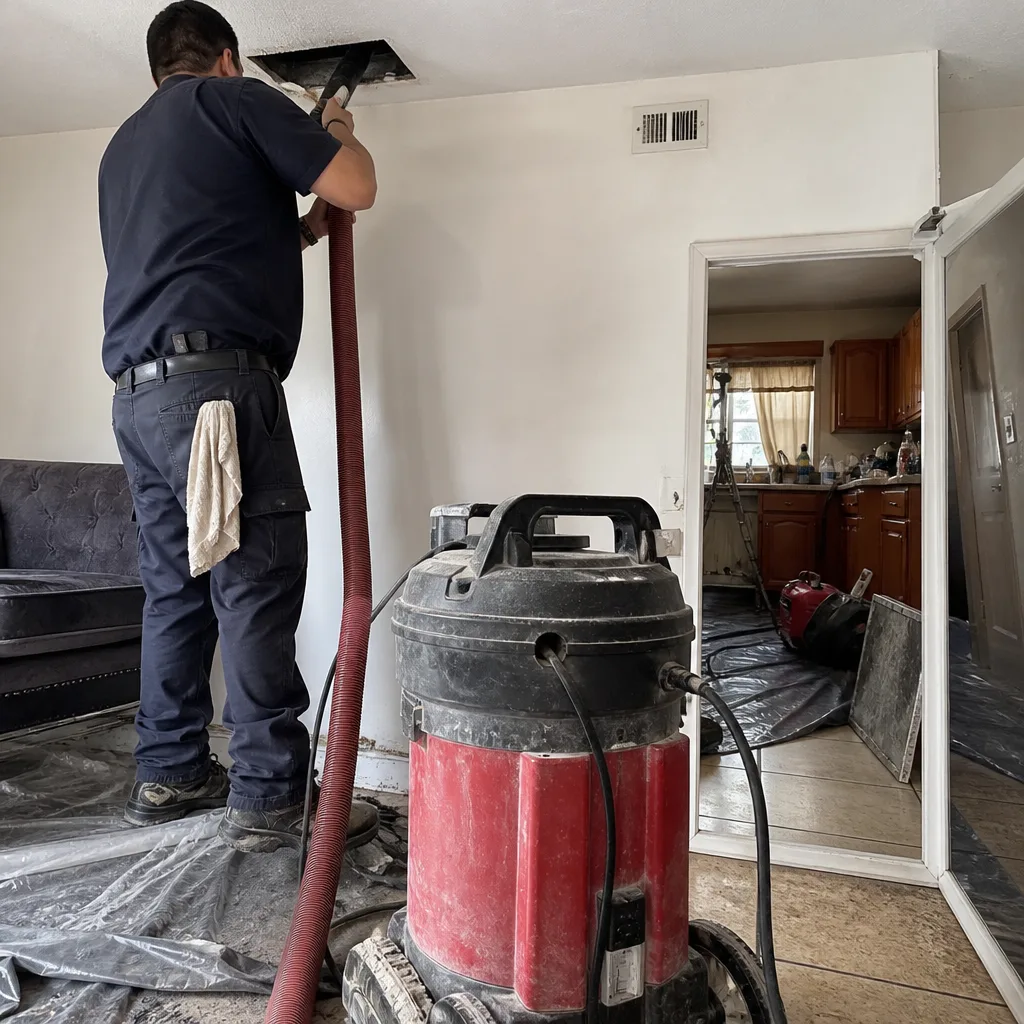 Before
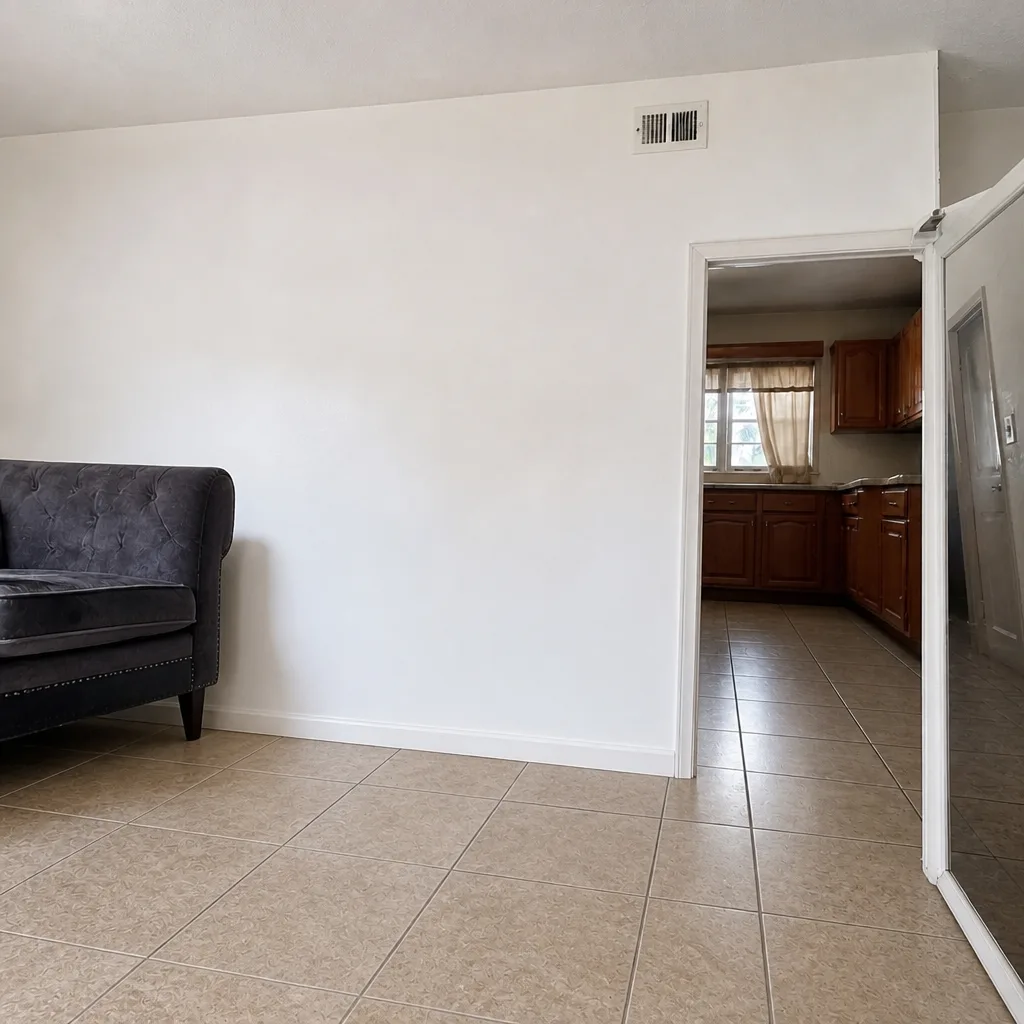 After
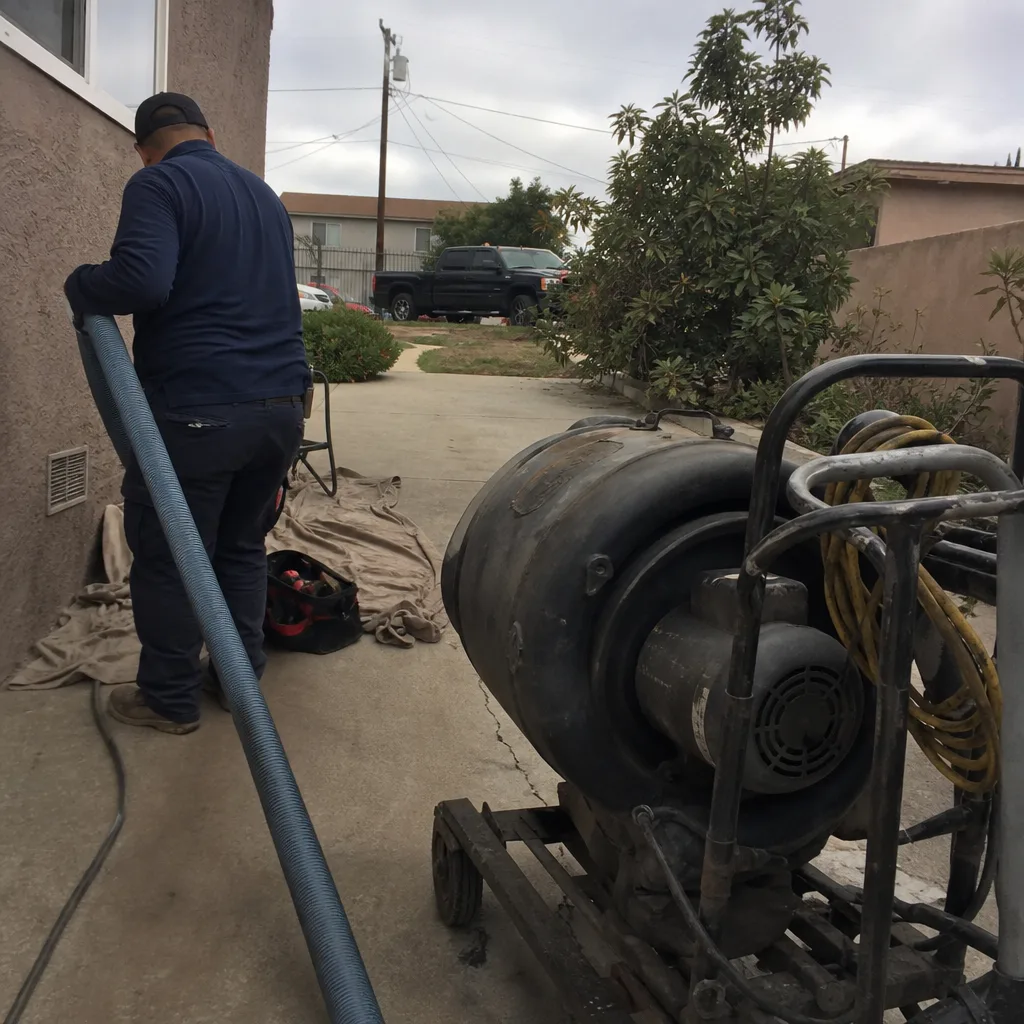 Before
 After
 Before
 After
When to Call a Professional
Visible dust blowing from registers when the system runs, rooms that never seem to hold temperature, a persistent musty odor from the vents, or a dryer that takes two cycles to dry a load – these are signs that your air pathway has a problem that a filter change won’t solve. In South Gate homes where ducts run through hot attics, the temperature swings bake particulate onto duct walls, and that adhered material requires mechanical agitation to remove. If you’ve never had your system cleaned and your home was built before 2010, it’s time to at least get an assessment. Duct Cleaning South Gate offers free estimates in South Gate – call (855) 925-0879. We answer 24/7. Fast dispatch from 7am to 7pm, Sunday through Friday.
Frequently Asked Questions
Air duct cleaning in South Gate typically costs $350 to $900 for a full system, with the price driven by home size, number of returns, equipment class, and whether dryer vent cleaning or duct repairs are included. The written estimate sets the final price, and estimates are free – call (855) 925-0879 for a quote specific to your home’s system.
Cheaper quotes usually reflect portable vacuum equipment that removes loose debris from the duct center without powered agitation or HEPA filtration. These systems cannot physically scrub adhered particulate from duct walls, which means the cleaning lasts less time and removes less material. The price gap isn’t profit margin – it’s what actually happens inside your ducts.
Ask for before-and-after photos or video of your ductwork interior. A legitimate company using professional-grade equipment will document the job. If a contractor can’t or won’t show you what the inside of your ducts looked like before and after, that’s a red flag. Call (855) 925-0879 to ask about our documentation process.
Most South Gate homes benefit from professional cleaning every three to five years, though homes with pets, smokers, or recent renovation work may need more frequent service. South Gate’s dry climate keeps particulate suspended in household air, which means it settles into ductwork on a predictable cycle.
Not usually. Dryer vent cleaning is a separate service with different equipment needs, and it should be itemized separately. A proper quote will flag the dryer vent as a fire-safety service, not an add-on. Your dryer vent is a fire risk your HVAC company won’t mention – national fire safety organizations have documented clogged dryer vents as a leading cause of residential fires. Call (855) 925-0879 for separate pricing.
Yes. If you run a whole-home filtration or humidity control system from Honeywell or Aprilaire, the ductwork is the delivery mechanism for that treated air. Clean ducts mean the air moving through your filtration system isn’t picking up new particulate from the duct walls after it’s been filtered. Our technicians understand how ductwork performance connects to whole-home air treatment, not just the ducts in isolation.
The Bottom Line
Duct cleaning pricing in South Gate in 2026 is stratified by equipment class, not just by contractor margins. A $299 portable vacuum service and a $750 full-source removal cleaning with powered agitation and HEPA negative-air containment are different services with different outcomes. The factors that legitimately drive cost – dryer vent inclusion, duct repairs, access cuts, the return side – are the same factors that determine whether the job actually solves your air quality problem or just moves dust around for an afternoon. Ask equipment-level questions, get scope in writing, and verify the work afterward. The difference between a duct cleaning that lasts four years and one that lasts eighteen months is mechanical, and it’s recorded in the equipment on the truck.
Call Duct Cleaning South Gate at (855) 925-0879 for a free estimate. We answer 24/7. Fast dispatch from 7am to 7pm, Sunday through Friday. Professional-grade equipment, residential pricing – and a written estimate that spells out exactly what’s included before any work begins.
Written by the team at Duct Cleaning South Gate, serving South Gate since 2013.