
Last updated November 4, 2026
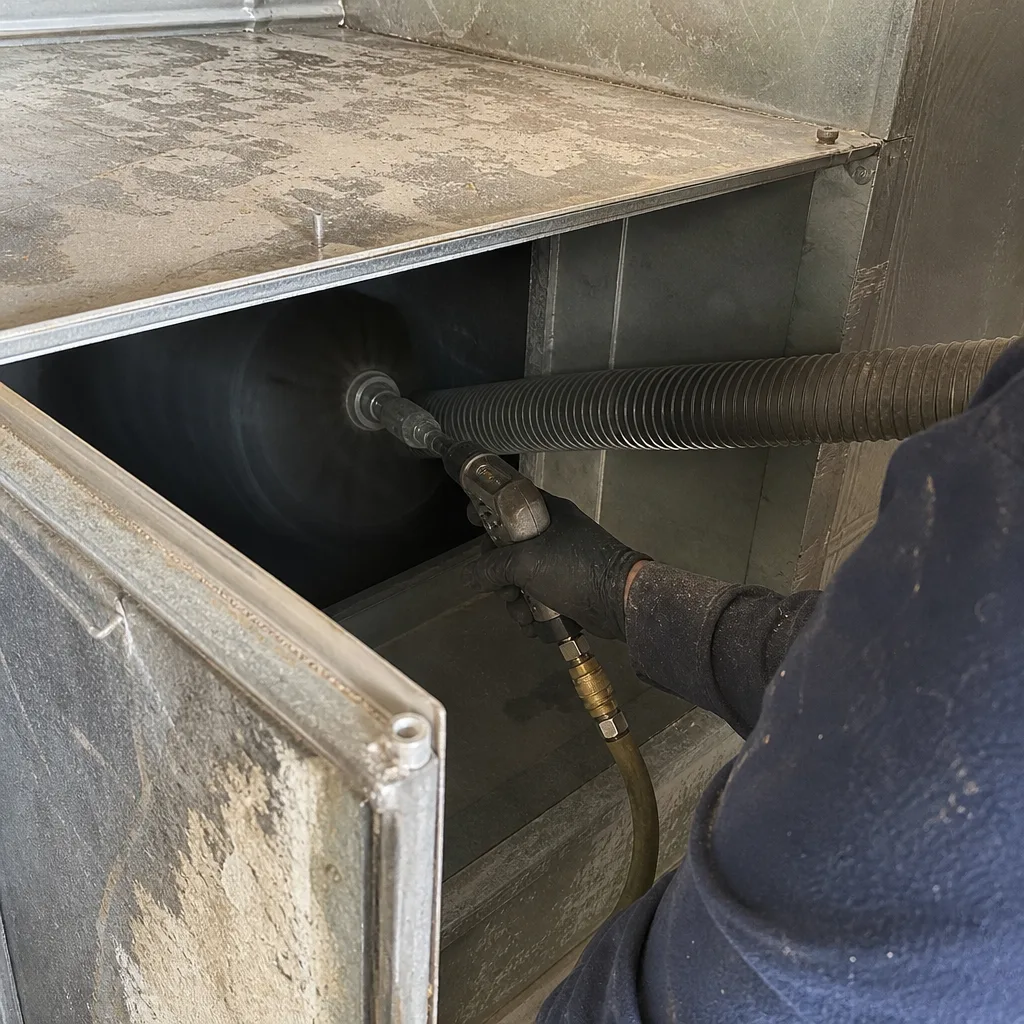
 Whole-home duct cleaning
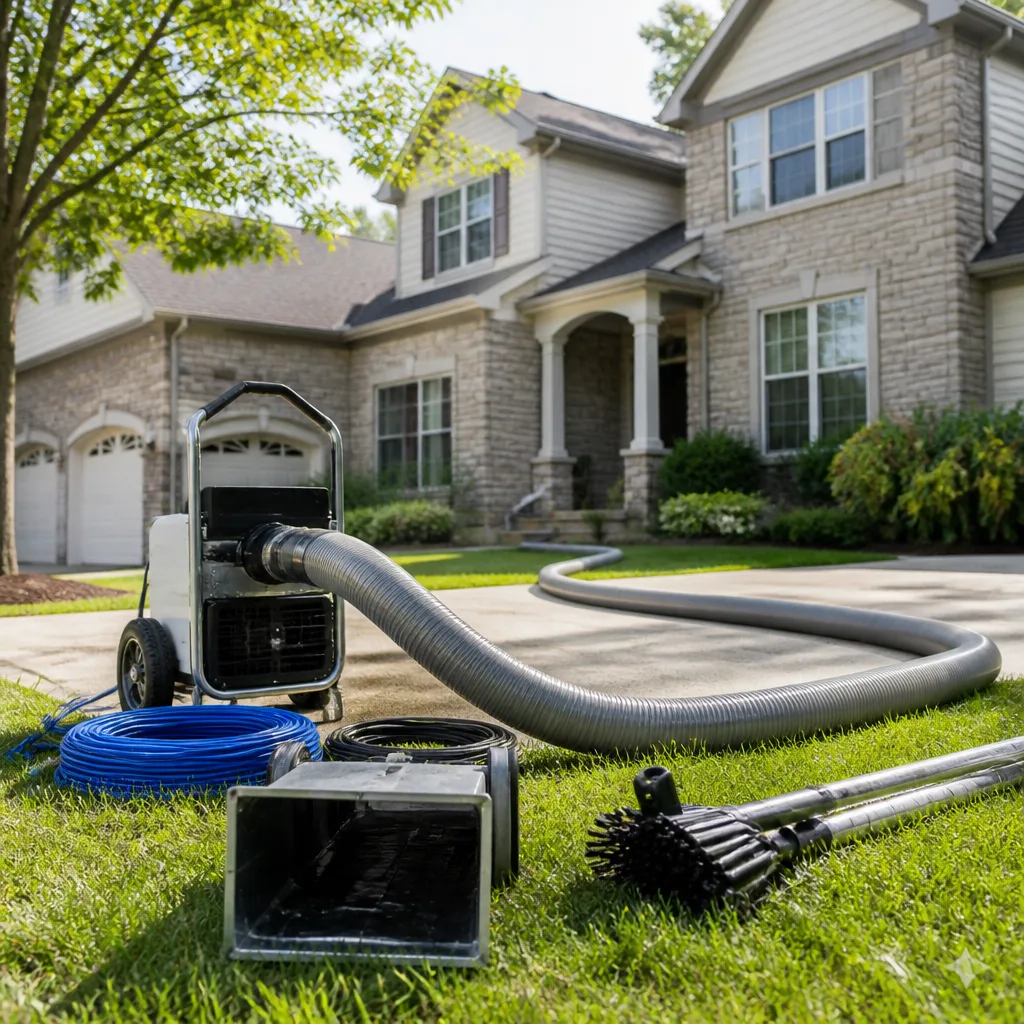
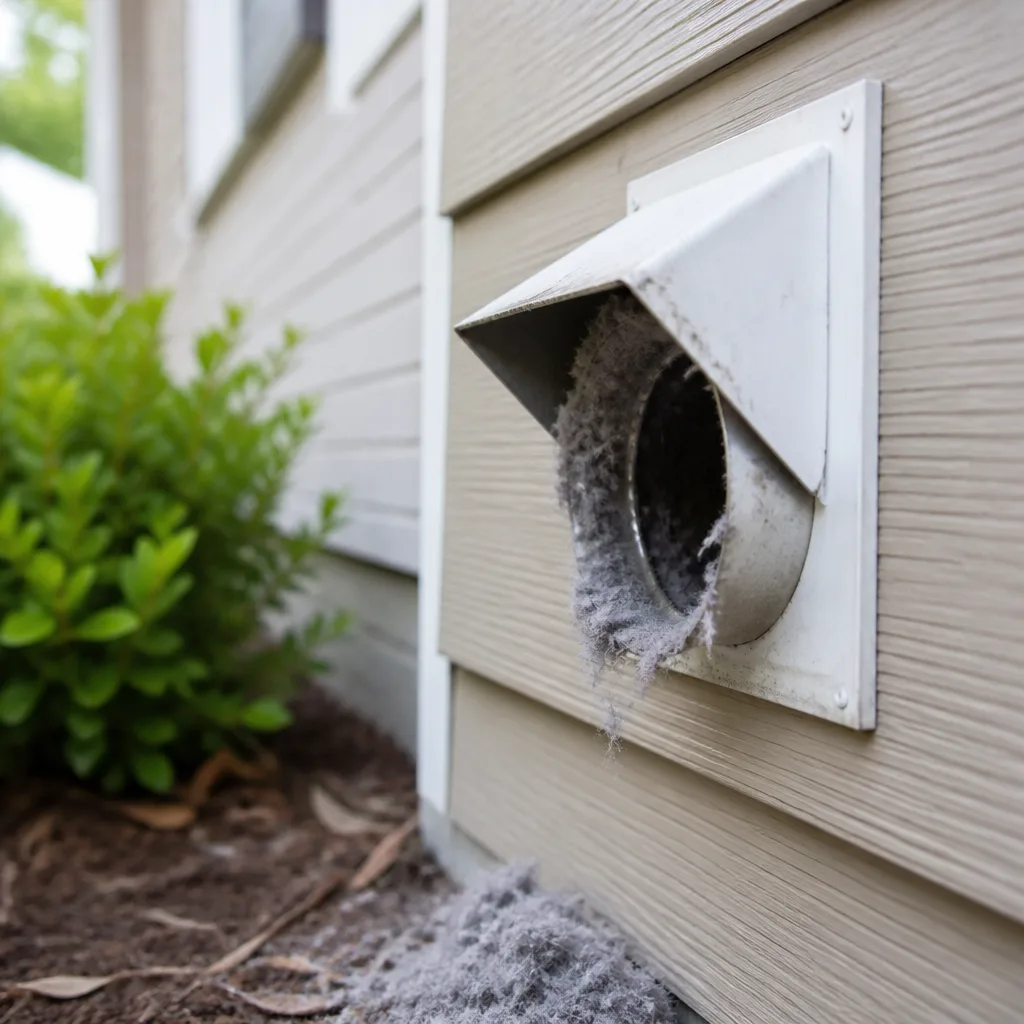 Dryer vent cleaning
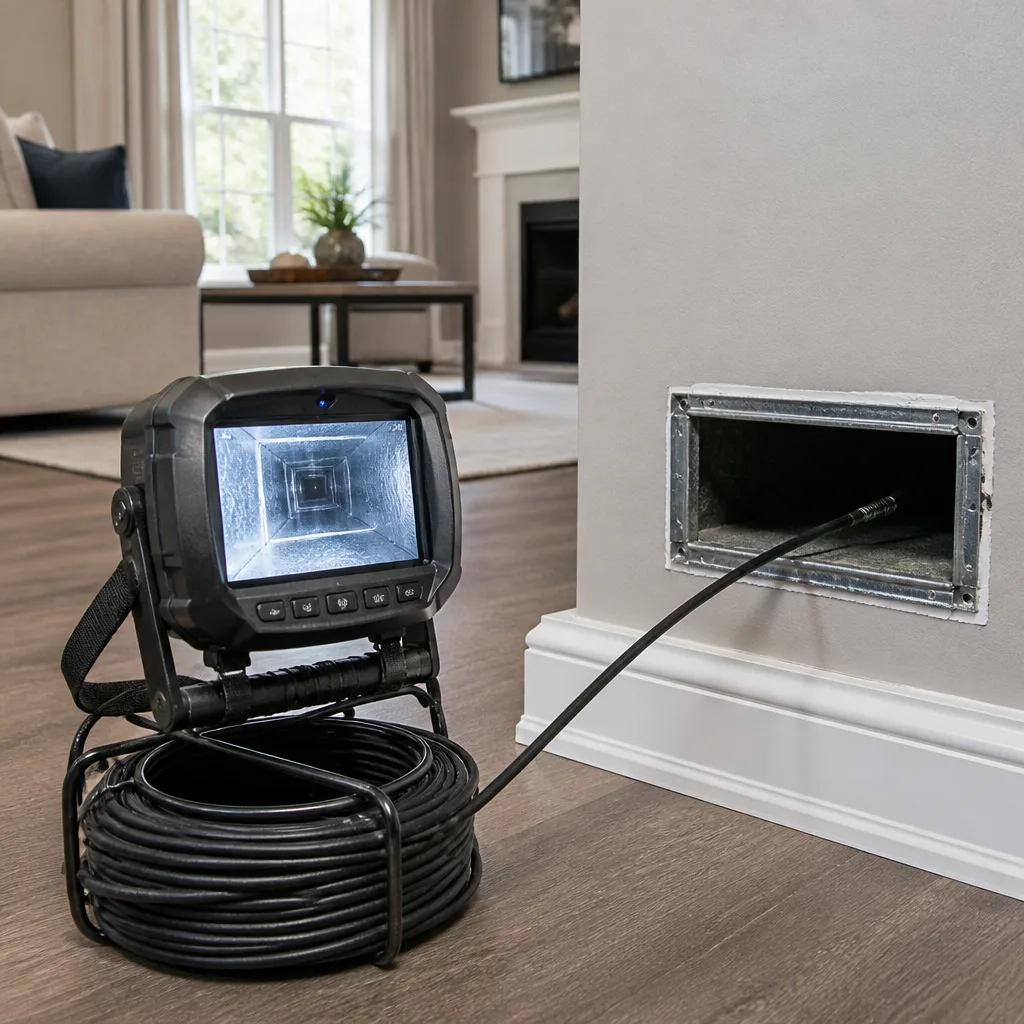 Camera inspection
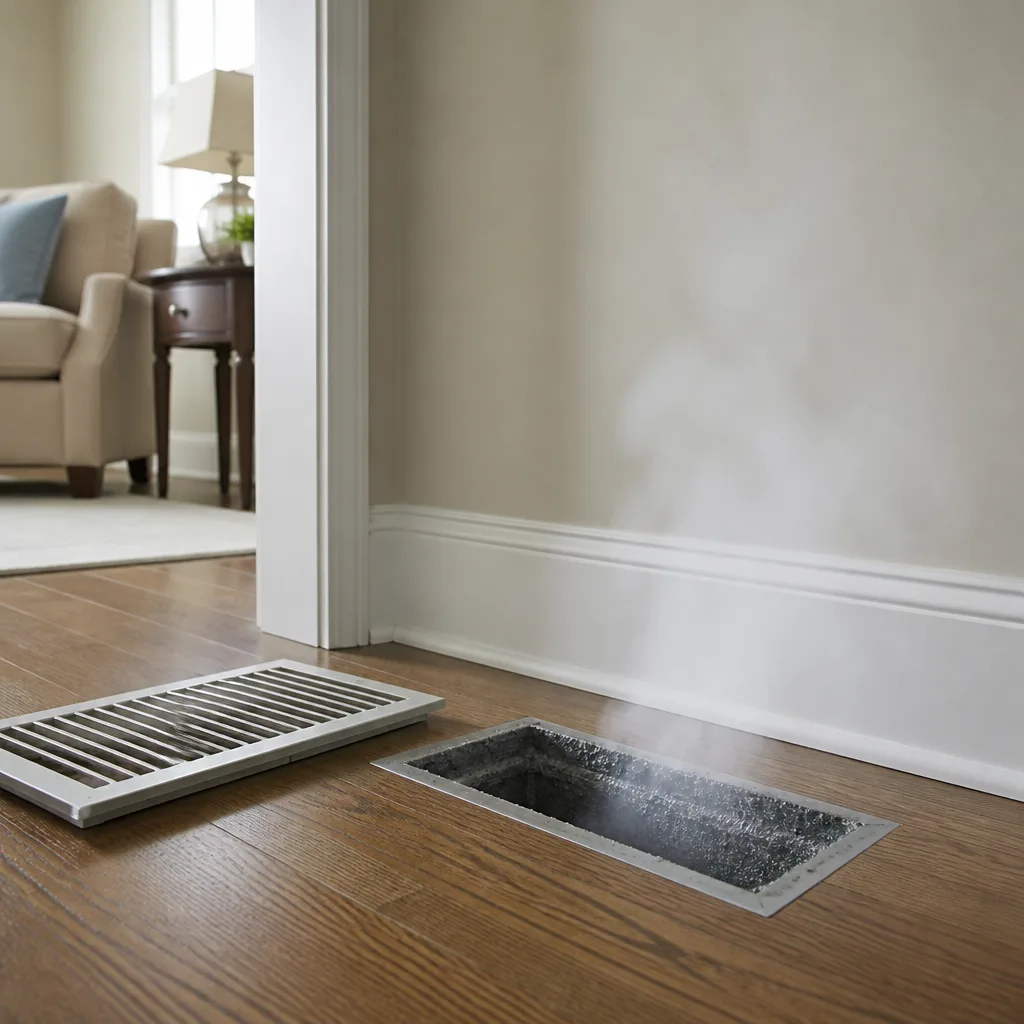 Sanitizing & deodorizing
Whole-system duct and dryer vent check with before-and-after photos - you see exactly what came out of your vents
That "$99 whole-house special" is a bait ad - the real number appears once they are in your hallway, or the "clean" is a shop-vac at the register. We photograph the inside of your ducts before and after instead.
How to Hire an Air Duct Cleaning Contractor in South Gate: A Step-by-Step Guide
Most homeowners in South Gate approach duct cleaning backwards. They call three companies, ask for the lowest price, and pick whoever shows up with the shiniest van. The problem is that duct cleaning is one of the few home services where the equipment gap between a serious operator and a budget outfit is visible the moment they open the back doors. A shop-vac bolted to a pickup cannot do what a truck-mounted negative air system does, and no amount of polite technicians changes that physics. This guide walks through the vetting sequence that disqualifies most weak operators before they ever step inside your home.
Quick Answer
To hire an air duct cleaning contractor in South Gate, start with equipment questions, not price questions: ask what brush system they use, whether they run true negative air, and whether the exhaust is HEPA filtered. Verify California licensing through the CSLB, require a flat-rate-per-system quote before work begins, and confirm they inspect and document the ductwork before touching equipment. Call Duct Cleaning South Gate at (855) 925-0879 for a free estimate.
Styles & brands we work with
- Whole-home duct cleaning
- Dryer vent cleaning
- Camera inspection
- Sanitizing & deodorizing
Table of Contents
- The Four Equipment Questions to Ask Before Scheduling
- How to Read a Contractor’s Quote Structure
- What Legitimate Licensing and Liability Looks Like in California
- Red Flags Specific to South Gate’s Market
- How to Structure the Job Walkthrough Before Work Begins
- How to Verify the Work Was Actually Done
- Common Mistakes to Avoid
- When to Call a Professional
The Four Equipment Questions to Ask Before Scheduling
Ask these four questions in order. When a contractor hesitates on any of them, that hesitation is your answer. Every legitimate operator in South Gate who runs commercial-grade equipment will answer immediately, often with model names and specifications before you finish the sentence.
Question 1: What brush system do you use, and what diameter options do you have?
Acceptable answer: A rotary brush system with multiple diameter heads, typically 8 to 14 inches, matched to the duct size. The air duct cleaning equipment we run includes Rotobrush rotary brush systems, which agitate debris from the duct walls rather than just vacuuming the center of the pathway. Evasive answer: “We use professional equipment” with no name, or any mention of a vacuum-only approach. Vacuum-only cleaning leaves the film and particulate matter that adheres to duct surfaces. The brush is what removes it.
Question 2: Do you run negative air, or is it a positive-pressure blower?
Acceptable answer: Negative air. This means the vacuum unit creates suction at the register while the brush agitates inside the duct, pulling dislodged debris toward the collector rather than pushing it out into the room. Our Nikro HEPA-rated vacuum equipment maintains negative pressure throughout the cleaning process. Evasive answer: “It works either way” or “we don’t need negative air.” Positive-pressure blowing, which some budget operators use, pushes air and debris forward through the duct, and any leaks in the ductwork become exit points for that debris into wall cavities or living space.
Question 3: Is the exhaust on your vacuum unit HEPA filtered?
Acceptable answer: Yes, the unit exhausts through HEPA-rated filtration. This matters because non-HEPA units capture large debris but exhaust fine particulates back into the air inside your home. The entire point of cleaning is removal, not redistribution. We describe our approach as captured, not recirculated, because the Nikro units we use trap particulates at the collection point rather than exhausting them through a simple cloth filter. Evasive answer: “Standard filters” or no answer at all. Ask specifically whether the filter is HEPA-rated and watch the response.
Question 4: How do you contain the work area during cleaning?
Acceptable answer: The technician should describe some containment protocol: sealing registers, laying drop cloths, using containment barriers around the work area, or running negative air with the collector positioned outside where practical. We use Abatement Technologies negative-air and containment equipment, a standard borrowed from mold and restoration work, applied to residential duct cleaning. This is a remediation-grade approach that keeps dislodged material from settling anywhere except the collection unit. Evasive answer: “We’re careful and clean up after.” Careful is not a method.
Contractors who run Rotobrush and Nikro systems will usually volunteer model specifications. Those who try to steer the conversation back to price are telling you something useful about their equipment.
How to Read a Contractor’s Quote Structure
Quote structure tells you more about a contractor’s honesty than the dollar figure at the bottom. There are two legitimate pricing models in duct cleaning, and one model that signals trouble.
Flat-rate-per-system pricing. The contractor quotes one price for the entire duct system: all supply and return ducts, the plenums, and the main trunk lines. This price is set after asking about square footage, the number of registers, the number of systems, and whether the home has flexible or rigid ductwork. The advantage is clarity: the number you agree to is the number you pay, and the contractor is motivated to clean thoroughly rather than stretch the job. We quote flat rates per system precisely for this reason. The written estimate is the price, set before work begins.
Per-vent pricing. The contractor quotes a price per individual vent or register, then multiplies by the number in your home. A home with 14 registers at $25 per vent comes to $350. This can be honest, but it invites bad behavior: the contractor arrives, counts “extra” vents, finds “additional” returns, and the price climbs. Per-vent pricing also creates a perverse incentive to move faster through each vent, because the contractor is paid per unit, not per quality of work.
The red flag structure: a low promotional price that covers “up to X vents” with per-vent charges above that number, or a quote that arrives without anyone asking about square footage, duct material, or the number of systems. A credible technician cannot price a system he has not asked about. South Gate’s housing stock runs from compact postwar bungalows to larger ranch layouts, and the duct work varies accordingly. A real quote reflects that variation.
Ask for the quote in writing before the crew arrives, and confirm that the number is the final number. We put the flat price per system in the written estimate and hold to it. If a contractor will not commit a number to writing before work starts, keep looking.
What Legitimate Licensing and Liability Looks Like in California
California regulates contractors through the Contractors State License Board, and any company performing South Gate duct cleaning work that involves any modification or repair to the HVAC system should hold a current CSLB license. Look up the company name on the CSLB website. The license should be active, with no unresolved complaints or suspensions. If the company only cleans and never repairs, the licensing requirement can be less clear, which is precisely why we carry the credential regardless of the job scope.
General liability insurance matters because a technician is working inside your walls, around your furnace, and near your family. Ask for a current certificate of insurance and confirm the policy limit. A credible contractor will send it without hesitation. The minimum coverage that signals seriousness is one million dollars. If a company cannot produce an insurance certificate, do not let their crew into your attic.
NADCA membership, which stands for the National Air Duct Cleaners Association, is a signal worth noting. It indicates the company follows a written standard and has committed to ongoing education. But it is not a guarantee of quality. Think of NADCA membership like a gym membership: it shows intent, not performance. The equipment questions above are a stronger filter than any membership logo.
We hold state licensing and maintain insurance, but the thing we put in front of customers first is our equipment, because that is what does the work. A license proves you are allowed to do the job. A Rotobrush system proves you can.
Red Flags Specific to South Gate’s Market
South Gate sits inside a dense Los Angeles metro market where duct cleaning companies compete hard for phone calls, and that competition produces specific bad behavior. These are the patterns to watch for in this area specifically.
“Whole house” deals under $99. The economics do not work. A legitimate operator running truck-mounted negative air equipment cannot send a crew, cover fuel, maintain equipment, and pay wages for under $99. What happens is the crew arrives, confirms the low price covers a trivial scope, then presents a menu of “recommended” additions that push the bill past $600. The cheap price was never the real price. It was a means to get a van in your driveway. A whole-home duct cleaning in South Gate, done properly with real equipment, costs more than $99, and any honest contractor will say so.
Quoting without asking about square footage. Duct volume scales with home size, and home sizes vary widely across South Gate’s neighborhoods. A contractor who quotes a price before asking the square footage, the number of systems, or whether you have rigid or flexible ductwork is not quoting; he is guessing, and guessing high.
Refusing to name equipment. Ask the equipment questions above. If the contractor will not name the brush system, the vacuum unit, or the filtration, assume the equipment cannot bear scrutiny. Equipment you can verify by name matters. Rotobrush, Nikro, and Abatement Technologies are all searchable brand names with commercial reputations. A contractor running that equipment will happily tell you.
One-system pricing that becomes two-system reality. Some homes in South Gate have a single HVAC system. Some have two. A contractor who quotes for one system and “discovers” a second on arrival is either inexperienced or manipulating you. Raise the question of how many systems the home has on the call, and confirm the quote covers all of them before the crew rolls out.
No mention of dryer vents. This one is specific. A conscientious operator in South Gate will ask whether you want the dryer vent cleaned while performing the duct work, because a clogged dryer vent is a documented fire hazard. A contractor who never raises it is thinking about his invoice, not your house. We treat dryer vent cleaning as a fire-safety service, not an add-on, because that is what the recognized hazard data says it is.
How to Structure the Job Walkthrough Before Work Begins
- Confirm the system count and access points. The contractor should walk the home with you, locate the furnace or air handler, identify supply and return registers, and count the systems. If he does this from the curb, find another contractor.
- Inspect the filter condition. A credible technician looks at the existing filter and notes what he sees. A severely loaded filter tells him what the ductwork likely holds. It also tells him whether the system has been maintained at all.
- Check for duct access cuts. Older homes in South Gate often have no pre-existing access ports in the ductwork for cleaning equipment. A serious contractor will cut clean access ports where needed and seal them with proper caps afterward. Ask about this before work begins so you understand where cuts will be made and how they will be closed.
- Document conditions before touching equipment. A credible walkthrough includes documenting the visible condition of each system: filter state, register locations, any visible mold or moisture, any disconnected duct runs. We inspect and document before we start, and we document again after, because your air duct cleaning results should be verifiable, not asserted.
- Review the scope in writing. The walkthrough ends with a written estimate that states the system count, the flat price, and the scope: supply ducts, return ducts, plenums, trunk lines. Anything not on the estimate is not in the job.
A contractor who skips the walkthrough and goes straight to firing up the equipment has skipped the part of the job where accountability gets established. The walkthrough is where the contractor proves he understands your specific system, not just duct cleaning in general.
How to Verify the Work Was Actually Done
The honest contractors in South Gate will hand you a way to verify the work independently. The ones with something to hide will hand you an invoice and disappear. Here is what real verification looks like.
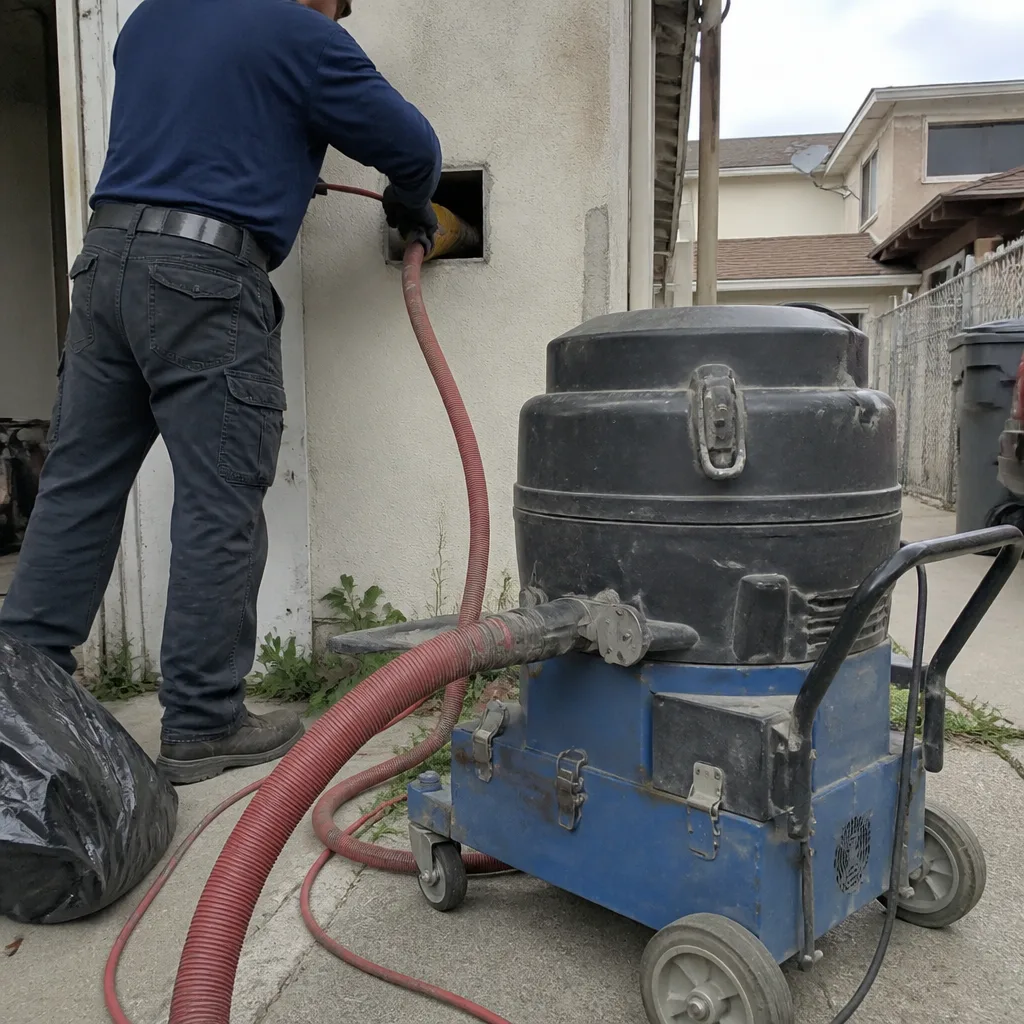
Before-and-after photos of the interior of the ducts. The technique is straightforward: a camera or inspection scope is inserted through an access port before cleaning and again after. You should see the difference in the photos, and you should be able to see the same identifying features in both sets of images so you know the “after” is not from a different house. We provide before-and-after photos as standard practice, because a customer who can see the duct interior before and after does not need to take our word for it.
Physical observation of the collection unit. When the job is done, ask to see what the collector caught. You may not want to inspect it closely, but it should exist and it should contain a visible volume of material. An empty collector after a full system cleaning raises questions.
Clean register areas. The area around each supply and return register should be clean when the crew leaves. Debris scattered around the registers suggests the containment protocol was weak, and weak containment means debris went somewhere.
Sealed access ports. Any ports cut for cleaning access should be sealed with proper caps or plates, not left open or taped. Walk the home and check.
If a contractor cannot show you before-and-after photos of your own ducts, assume the work was not documented because it was not thorough. Photos are the cheapest insurance a contractor can offer, and the ones who refuse are telling you something.
Common Mistakes to Avoid
- Asking price first. Price is the last question, not the first. Equipment, licensing, and scope come before any dollar figure. A low price from a shop-vac operator costs more than a higher price from a negative-air operator once you account for the work not actually being done.
- Believing “whole house” pricing without a written scope. “Whole house” means whatever the contractor wants it to mean unless the scope is written down. Get the system count, the duct types, and the flat price in writing before the van arrives.
- Hiring the same company for cleaning and repair when only one is competent. Some HVAC generalists do acceptable repair work and weak cleaning. The reverse is also true. We repair ducts, not just clean them, and that matters because the two skills overlap but are not identical. If a company’s primary business is AC replacement, ask directly whether duct cleaning is a core service or a convenience.
- Ignoring dryer vents. The dryer vent in a South Gate home can be a fire risk that a generalist HVAC company will not mention because it is not part of the HVAC contract. A clogged dryer vent restricts airflow, overheats, and ignites accumulated lint. Treat it as a separate fire-safety question, and have it cleaned.
- Assuming duct cleaning resolves air quality complaints. Duct cleaning removes accumulated debris from the duct pathway. If the source of the air quality problem is a leaking duct pulling in attic air, or a system imbalance, cleaning alone will not fix it. A qualified contractor should tell you this, and offer air duct repair as a separate service if that is what the house actually needs. We do, because the root cause matters more than the surface symptom.
- Choosing a contractor who cannot describe his equipment. This is the simplest filter in this guide. Ask for the equipment names. Rotobrush, Nikro, Abatement Technologies. If the answer is vague, the equipment is vague. Get specific or get another contractor.
When to Call a Professional
Some situations tolerate delay and some do not. Visible mold growth on the register grilles or the duct interior is a call-now situation, because mold in the duct pathway distributes spores through every room the system serves. Dust that reappears on surfaces within days of cleaning suggests the system is pulling in unfiltered attic or crawlspace air through leaks, and the right call is a contractor who can clean and then repair the duct work. A dryer that takes two cycles to dry clothes is telling you the vent is restricted, and restricted vents overheat. Renovation work in the home, particularly drywall sanding, loads the duct work with fine particulate that will circulate for months without professional removal. Duct Cleaning South Gate offers free estimates in South Gate. Call (855) 925-0879. We answer 24/7. Fast dispatch from 7am to 7pm, Sunday through Friday.
See the difference
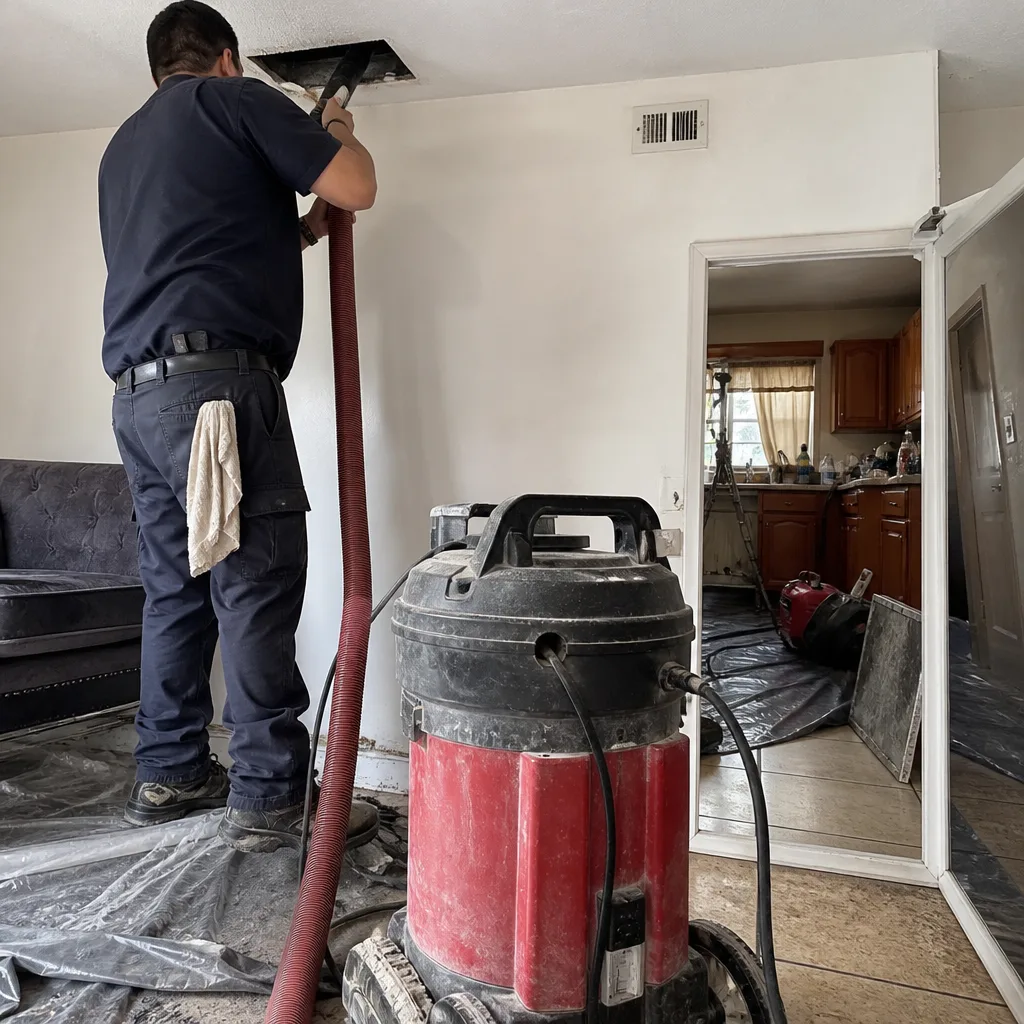 Before
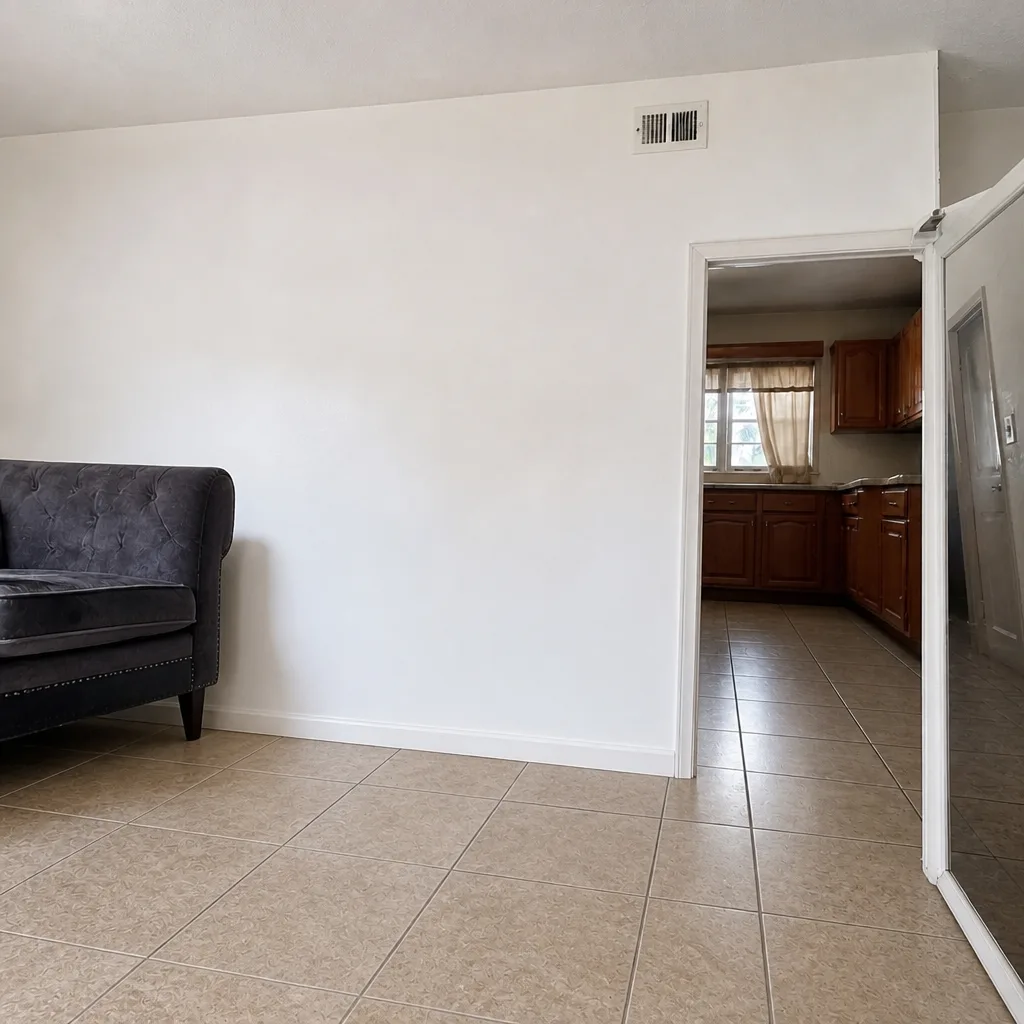 After
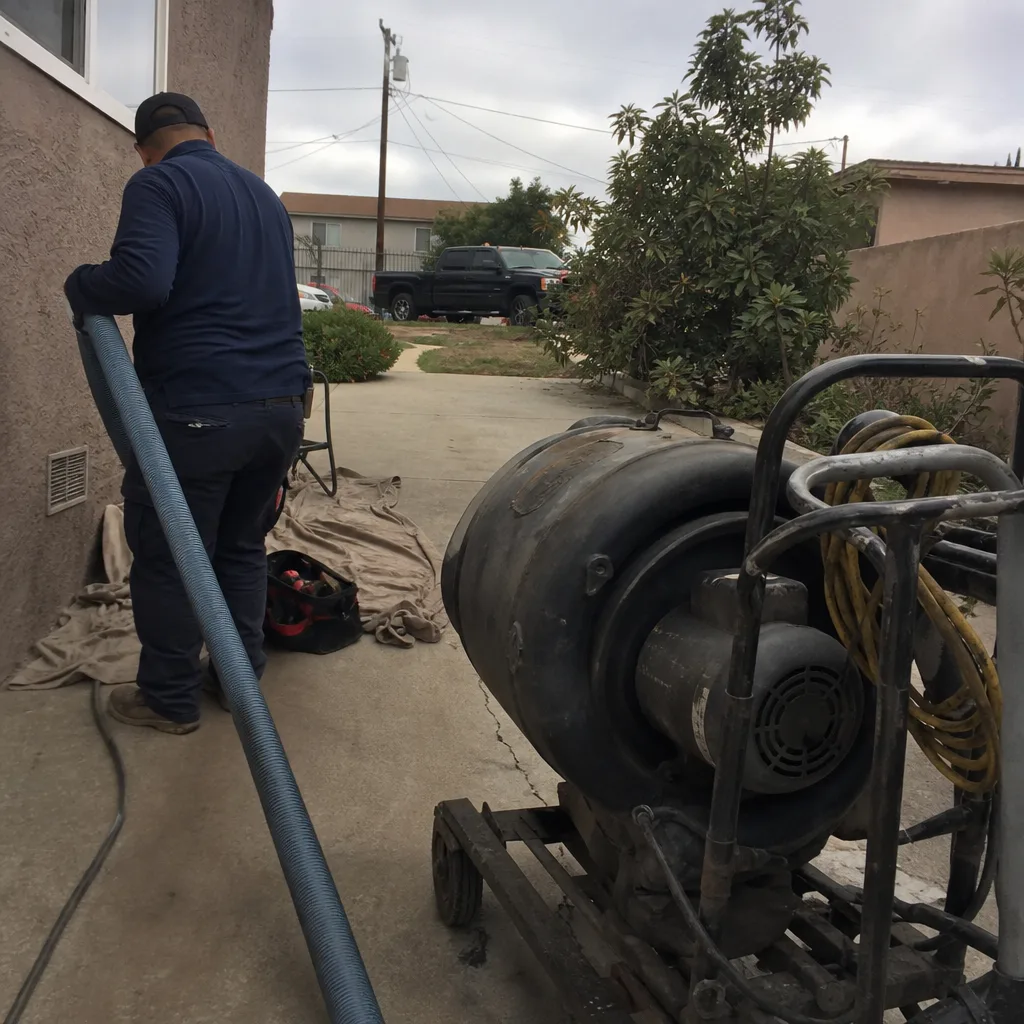 Before
 After
 Before
 After
Frequently Asked Questions
A legitimate whole-system air duct cleaning in South Gate typically runs from around $350 to $700 for a single-system home, depending on square footage, the number of registers, and whether the ductwork is rigid or flexible. The price should be a flat rate per system, set in a written estimate before work begins. Call (855) 925-0879 for an exact quote. Estimates are free, and the written estimate is the price we hold to.
Cheaper quotes usually mean cheaper equipment: portable shop-vac-class machines instead of truck-mounted negative air systems, no HEPA filtration on the exhaust, positive-pressure blowing instead of brush-and-vacuum removal. The low price is the sales tool, and the real invoice arrives after the crew recommends “necessary” add-ons. A flat-rate quote from a contractor running professional-grade equipment is honest in a way a $99 special never is.
Require before-and-after photos of the duct interior taken through an access port, ask to see the collection unit contents after the job, and check that all access ports are properly sealed and register areas are clean. A contractor who cannot or will not provide photos of your own ducts has not documented the work because the work was not thorough.
For most South Gate homes, every three to five years is the sensible interval, adjusted upward for homes with pets, smokers, or recent renovation. Homes near heavy traffic corridors in the Los Angeles basin tend to accumulate particulate faster than homes in quieter, greener areas. If you cannot recall the last cleaning, or if you have lived in the home for five years without one, it is time.
Duct cleaning removes the accumulated dust, pet dander, and particulate that circulates every time the system runs, which can meaningfully reduce the volume of material that settles back onto surfaces. It is not an allergy cure and does not replace filtration, but a clean duct pathway means the system is not continuously redistributing old accumulation. Homes with Honeywell or Aprilaire whole-home air quality systems benefit from duct cleaning because the filtration units perform better downstream of a clean duct system.
Some can and some cannot. Leaking ducts pull unfiltered air from attics and wall cavities into the living space, and a contractor who only cleans cannot address that root cause. Ask whether the company offers air duct repair as a standalone service. We do, and we believe it is the difference between cleaning a system and actually fixing the problem. Your dryer vent is a fire risk your HVAC company will not mention, so ask about that as a separate scope item while you are at it.
The Bottom Line
Hiring a duct cleaning contractor in South Gate is a sequence of questions, and the sequence matters. Equipment questions come first because equipment determines whether the work is physically possible. Licensing and insurance come second because they determine whether the contractor is legally and financially accountable. Pricing comes last, and only after the walkthrough and the written scope. A contractor who resists the questions is failing the test, and the test costs nothing except the call. You are not buying a service you cannot verify. You are buying removal, extraction, and proof, and those are things you can hold a contractor to with photographs and a written estimate.
Written by the team at Duct Cleaning South Gate, serving South Gate since 2013.