
Last updated November 4, 2026
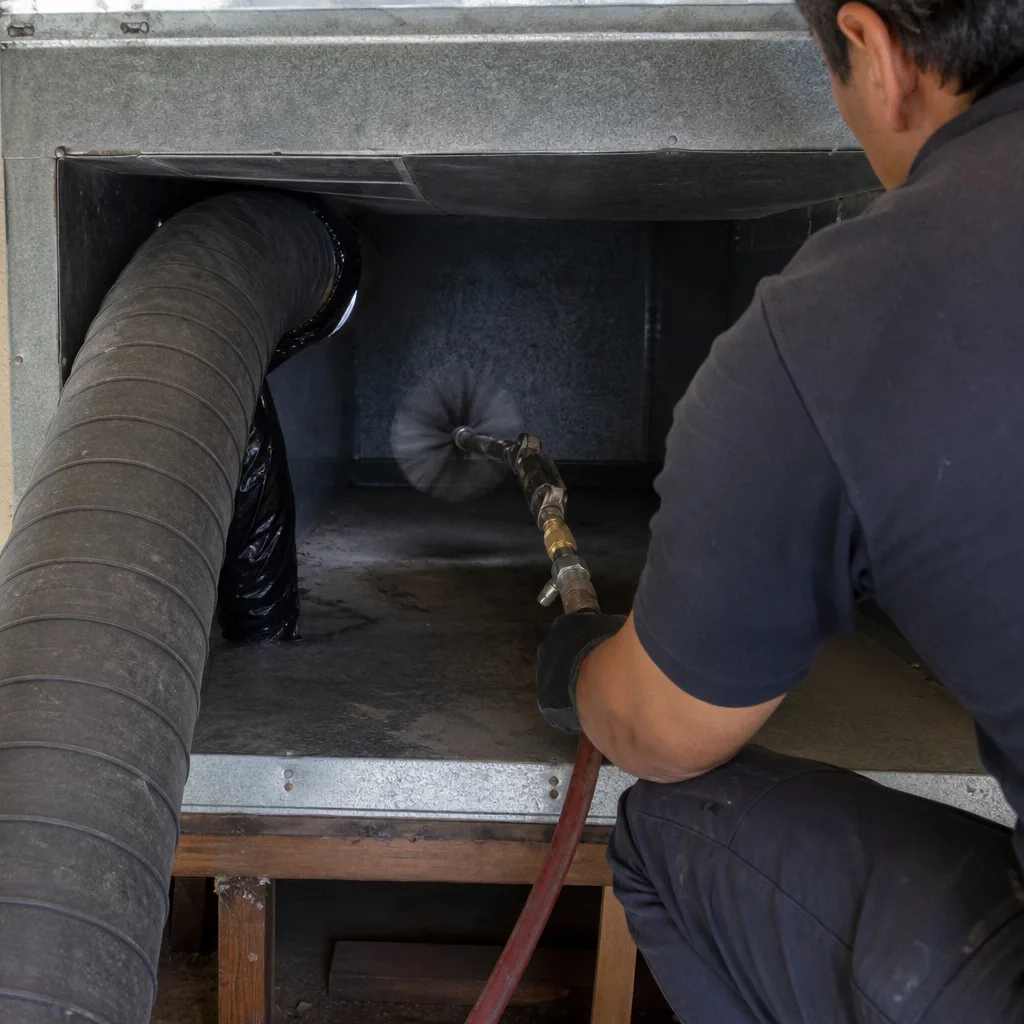
 Whole-home duct cleaning
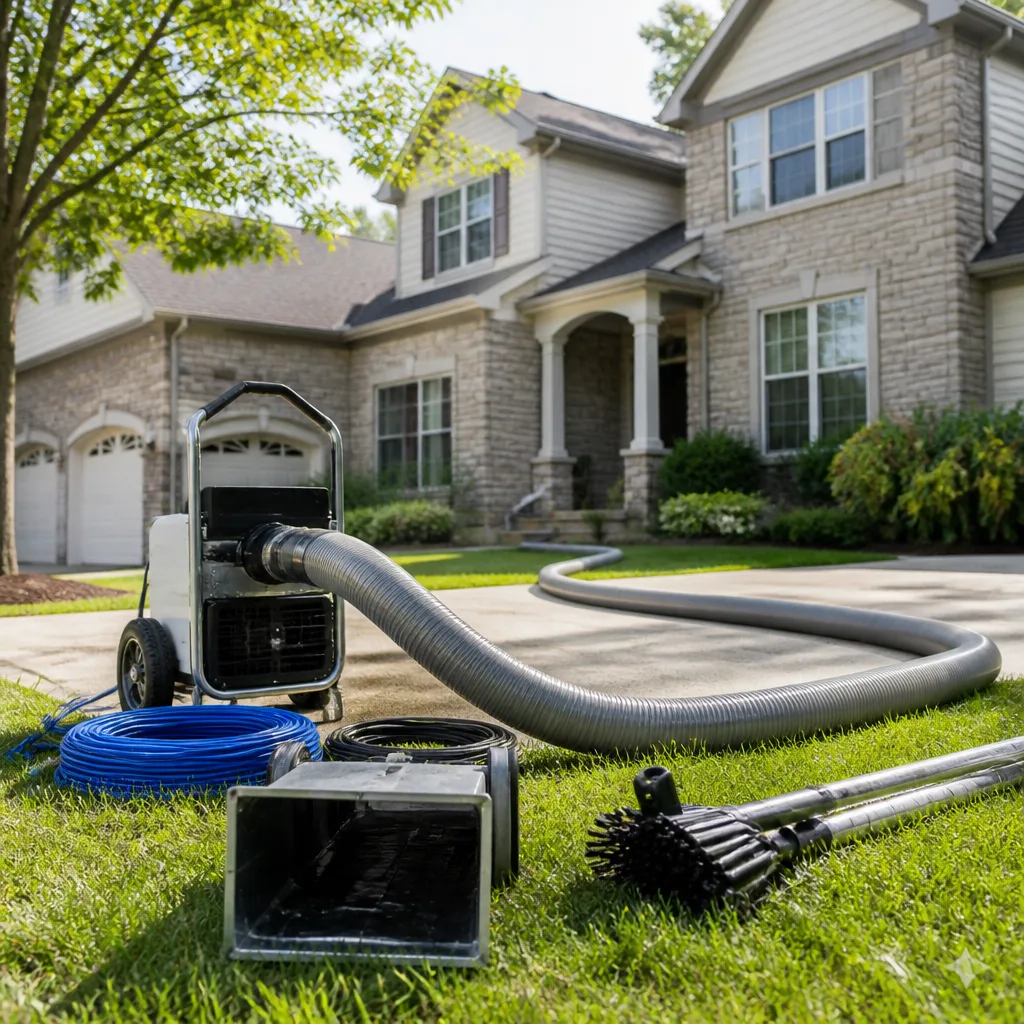
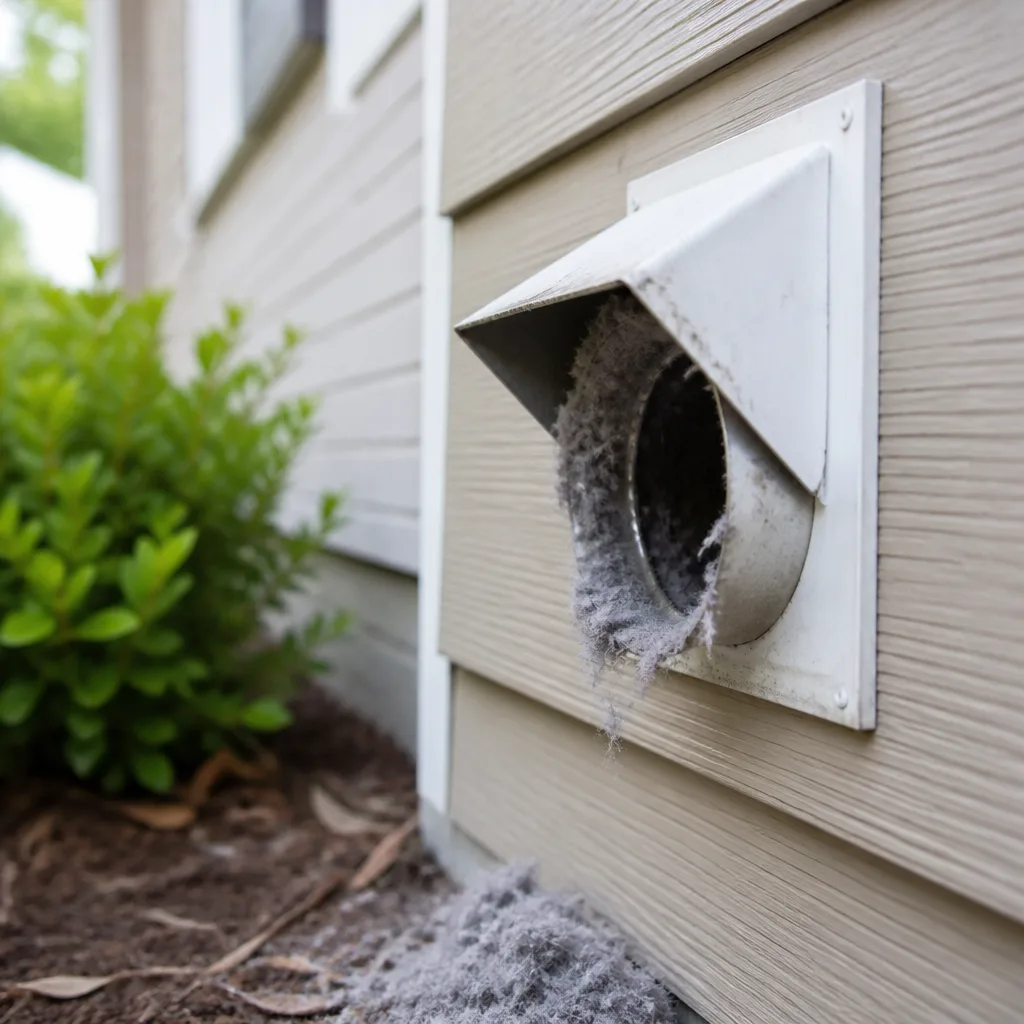 Dryer vent cleaning
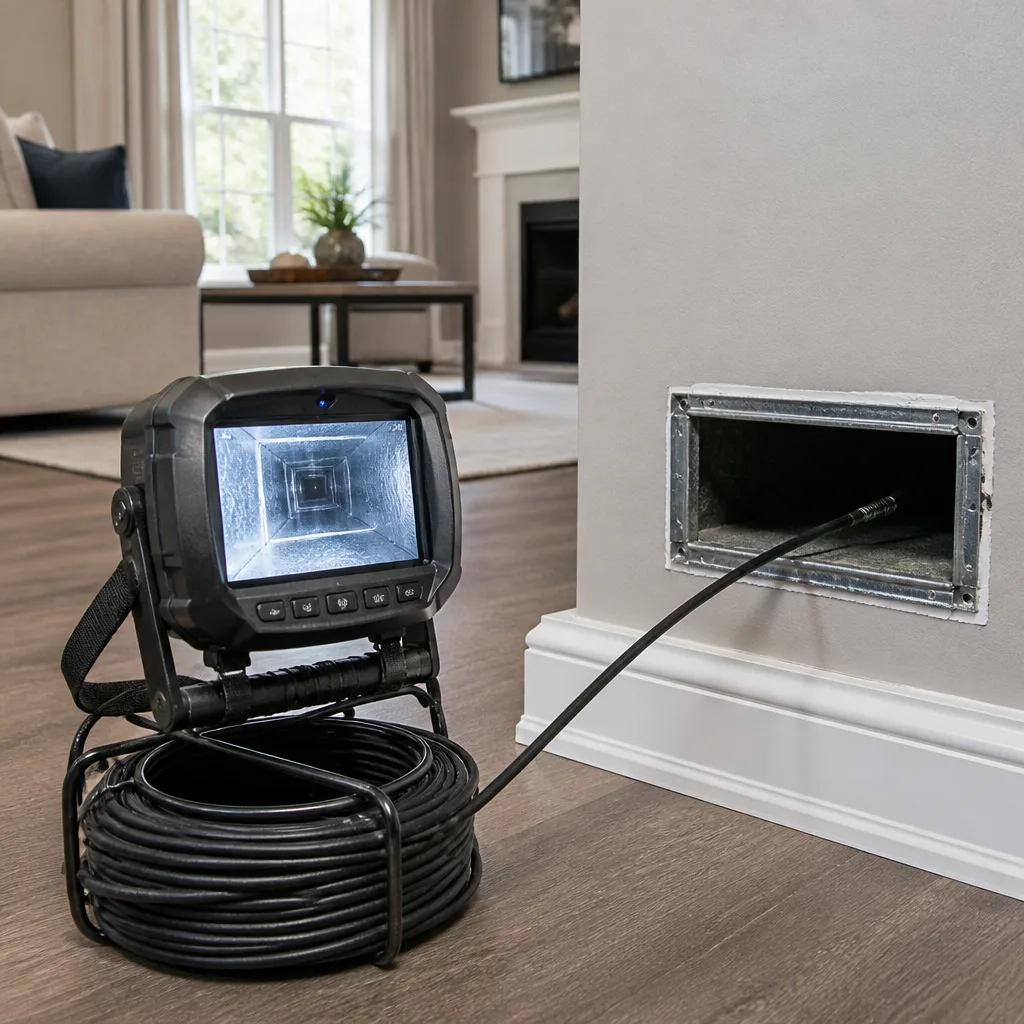 Camera inspection
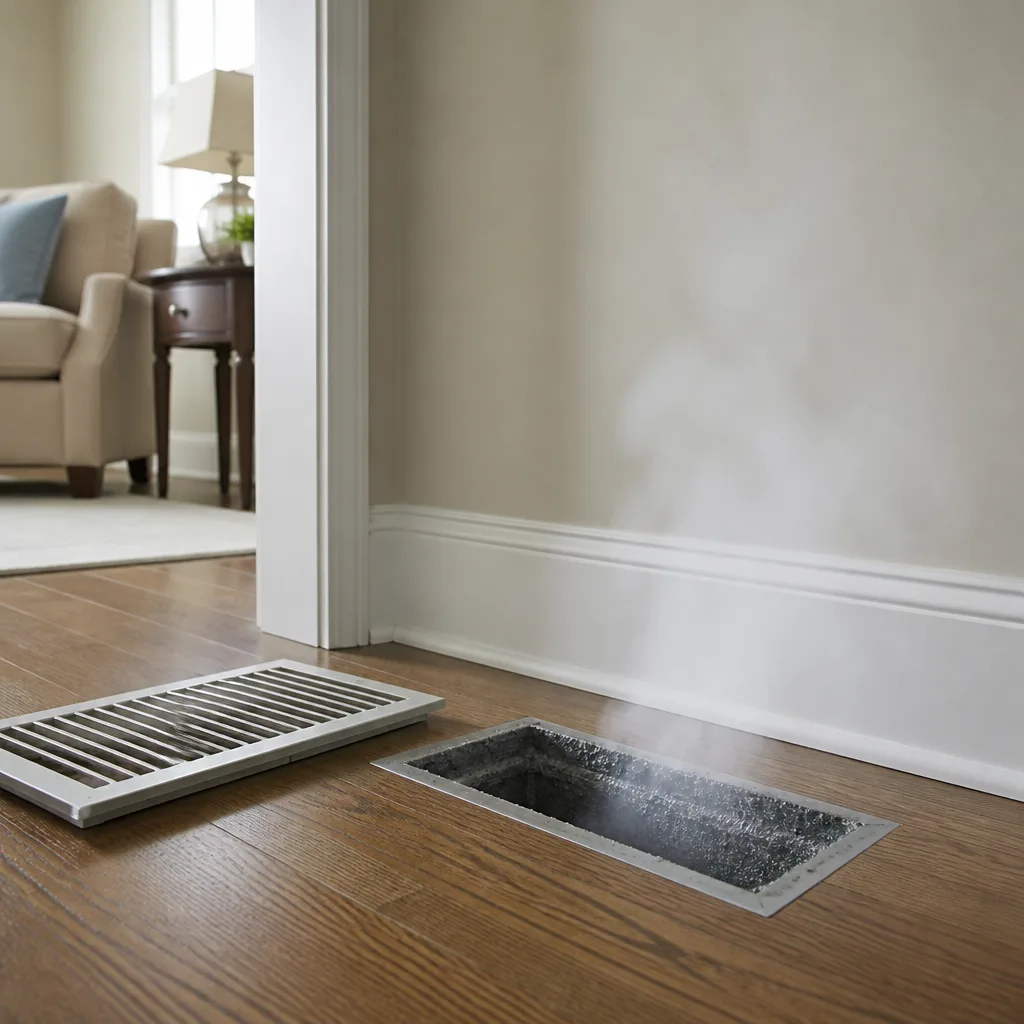 Sanitizing & deodorizing
Whole-system duct and dryer vent check with before-and-after photos - you see exactly what came out of your vents
That "$99 whole-house special" is a bait ad - the real number appears once they are in your hallway, or the "clean" is a shop-vac at the register. We photograph the inside of your ducts before and after instead.
The Complete Guide to Air Duct Cleaning in South Gate
Most homeowners in South Gate assume their ducts are either clean or dirty, full stop. The reality is more layered. A home built before 1985 in this area has, on average, two to three distinct contamination layers inside its ductwork: original construction dust from the slab pour and drywall phase, one or more insulation disturbances from retrofits or pest intrusion, and accumulated combustion byproducts from gas appliances and decades of street-level particulate drift. Each layer responds to a different extraction approach. A basic truck-mount vacuum addresses the loose top layer and calls it done. This guide explains what actually happens inside duct systems in South Gate, what professional-grade equipment does differently, and how to evaluate any company that steps onto your property.
Quick Answer
Air duct cleaning in South Gate typically involves a full-system extraction of accumulated dust, debris, and biological material from supply and return ductwork using negative-air containment and rotary brush agitation. The work usually takes three to six hours for an average single-family home, with pricing set per job by written estimate rather than per vent. The most important variable is the equipment: professional-grade systems from Rotobrush, Nikro, and Abatement Technologies capture dislodged particulate instead of blowing it back into your living space.
Styles & brands we work with
- Whole-home duct cleaning
- Dryer vent cleaning
- Camera inspection
- Sanitizing & deodorizing
Table of Contents
- What Duct Cleaning Actually Does (and What It Can’t Do)
- How South Gate’s Housing Stock Shapes Duct Contamination
- What NADCA Standards Require Versus What Budget Operators Do
- The Mechanical Sequence: Negative Air Before Agitation
- Rotobrush, Contact Vacuum, and Why the Tool Matters
- Dryer Vent Cleaning: The Fire-Safety Service Most Homes Miss
- Post-Cleaning Verification: What a Real Check Looks Like
- Air Duct Repair: When Cleaning Is Not Enough
What Duct Cleaning Actually Does (and What It Can’t Do)
Air duct cleaning is the mechanical removal of accumulated particulate from the interior surfaces of your HVAC distribution system. That includes supply ducts, return ducts, registers, grilles, the blower compartment, and the air handler cabinet. The goal is not sterility. It is source removal: getting the debris out of the house rather than loosening it and letting it settle back into carpet and furniture.
A professional cleaning should accomplish three things. First, it removes the loose particulate load that your filter never catches because it has already settled in the duct. Second, it exposes damage that was hidden under that debris: separated joints, crushed flex runs, rust-through, and pest entry points. Third, it gives you a clean baseline so that future filter changes and HVAC maintenance have a measurable starting point.
What duct cleaning cannot do is compensate for a system that is leaking at the plenum or returns. If a return duct pulls unconditioned attic air, cleaning the inside of that duct will not fix the static pressure imbalance that pulls the air in the first place. That is why air duct cleaning should be paired with inspection, and why a company that only cleans and never looks for root causes is leaving efficiency on the table. We repair ducts, not just clean them.
How South Gate’s Housing Stock Shapes Duct Contamination
South Gate is not a tract-home monoculture. The housing stock spans nearly a century, and the duct systems inside those homes differ in material, routing, and contamination profile. Understanding which category your home falls into tells you what kind of debris you are likely dealing with and why the cleaning approach matters.
Pre-1980 Construction: Original Ducts and Slab Work
A significant portion of South Gate’s residential stock predates 1980. These homes were often built on concrete slab foundations raised only minimally above grade, meaning ductwork had to be routed through walls, chases, and sometimes shallow under-floor spaces. The contamination profile here tends to be denser and older. Construction dust from the original build never fully left the system. Add decades of occupant turnover, DIY projects, and occasional insulation work, and you get a duct interior with stratified layers: fine gypsum dust at the bottom, fibrous insulation fragments above it, and a film of cooking aerosol and candle soot on the walls.
Older homes in South Gate also frequently have flex duct runs that have been in place for decades. Flex duct has a plastic inner liner, and that liner can degrade and become brittle over time. Cleaning brittle flex with an aggressive metal brush can tear the liner, which is why the tool and technique have to match the material. Professional-grade equipment with variable-speed agitation works here. A blunt-force approach does not.
Newer Builds and the Filter Problem
Homes built in the last twenty-five years in South Gate typically have better sealed systems and more filter surface area. But that does not mean clean ducts. A newer system can still load up with fine particulate if the filter has been neglected, and the finer the particulate, the more tenacious its bond to the duct wall. The debris profile in newer homes skews toward respirable-sized particles that are invisible as individual specks but visible as a gray film across the entire interior surface. This is not the dramatic dust bunnies of older homes. It is the kind of contamination that affects airflow and air quality without ever announcing itself.
What NADCA Standards Require Versus What Budget Operators Do
NADCA, the National Air Duct Cleaners Association, publishes the ACR standard: Assessment, Cleaning, and Restoration of HVAC Systems. The standard exists because duct cleaning has a long history of operators doing the minimum and charging for the maximum. Knowing what the standard actually requires gives you a way to evaluate a company mid-job.
The ACR standard requires source removal. That means mechanically dislodging debris from duct surfaces and extracting it from the system, which is a much higher bar than vacuuming accessible portions and moving on. The standard also specifies that ductwork must be placed under negative air pressure during agitation. There is no approved method that involves brushing ducts while the system is open to the living space without containment. If a company is agitating ducts with no negative air established, they are not following the standard, regardless of what their invoice says.
How to tell the difference mid-job in your South Gate home:
- Ask whether negative air pressure is being used and where the extraction point is. There should be a large-diameter vacuum hose connected to a containment point, usually at the air handler or a sealed plenum opening.
- Ask what tool is entering your ducts. A rotating brush on a flexible shaft is a source-removal tool. An air whip or skipper ball only blows air around.
- Ask to see the collection side. If the vacuum exhaust is vented inside your home rather than outside or into a HEPA-filtered unit, the process is recirculating what it removes.
- Ask for a visual walkthrough after the mechanical clean and before the system is reassembled. The ducts should look dry and bare, not merely less dusty.
In our experience, the difference between a compliant clean and a shortcut is visible in the first twenty minutes of the job. The equipment either is or is not present.
The Mechanical Sequence: Negative Air Before Agitation
The single most misunderstood concept in duct cleaning is sequence. You cannot agitate first and contain second. The order matters because once debris is airborne, it is either captured or spread. Negative air pressure has to be established before any tool touches the duct wall.
Here is the correct mechanical sequence for a full-system clean in a typical South Gate home:
- The HVAC system is shut down and the blower is isolated or sealed off so that debris cannot be pushed through the furnace or air handler.
- All supply registers and return grilles are sealed except the access points being worked. This creates controlled airflow paths rather than open holes.
- A high-volume vacuum unit is connected to the system, creating negative air pressure throughout the duct network. For homes where interior containment is necessary, Abatement Technologies negative-air equipment establishes the same pressure differential used in mold remediation and restoration work. Captured, not recirculated.
- Only after the system is under negative pressure does agitation begin. The brush or agitation tool enters the duct and dislodges debris, which is immediately drawn toward the vacuum extraction point by the pressure differential.
- The process repeats section by section, working from the farthest register back toward the air handler, so that each duct run is cleaned into the vacuum stream rather than into an already-cleaned section.
- After all branches are complete, the air handler cabinet, blower, and coils are cleaned separately with the system still isolated.
When negative air is skipped, the agitation process turns the duct system into a particle distribution network. The dust that was stuck to the duct walls is now floating in the home’s air column, settling on surfaces far worse than it ever was inside the duct. This is why the equipment list matters more than the price list.
Rotobrush, Contact Vacuum, and Why the Tool Matters
Duct cleaning equipment falls into two broad categories: contact systems that physically scrub the duct surface, and non-contact systems that rely on airflow alone. In South Gate homes with older flex duct and decades of layered contamination, contact systems generally produce a more complete result.
A Rotobrush rotary brush system is a contact tool. It uses a motorized rotating brush head on a flexible shaft, fed through the duct from the register opening. The brush agitates the duct wall directly, dislodging the adhered film that airflow alone leaves behind. Paired with a high-volume vacuum pulling negative pressure, the brush loosens and the vacuum captures, continuously. This is the same professional tool approach used by restoration contractors who need verifiable debris removal rather than cosmetic improvement.
Nikro HEPA-rated vacuum equipment serves a different but complementary function. HEPA filtration on the exhaust side means the vacuum unit is not reintroducing fine particulate into the home’s air. A standard truck-mount vacuum without HEPA on the exhaust can pull debris out of the duct and blow the smallest fraction of it back into the driveway or, depending on hose routing, into the house. The particulate that matters most for respiratory irritation is exactly the fraction that escapes unfiltered exhaust. Equipment you can verify by name: Rotobrush, Nikro, Abatement Technologies. Look them up and you will see the grade difference.
Contact vacuum systems, where a small brush attachment is paired with a portable vacuum at the register, have a place in tight or fragile duct runs. They are slower and less aggressive, which is sometimes exactly right. The key is matching the tool to the material. Rigid galvanized duct can accept aggressive agitation. Older flex duct cannot. A company that uses one tool for everything is not doing material-specific work.
Dryer Vent Cleaning: The Fire-Safety Service Most Homes Miss
Your dryer vent is a fire risk your HVAC company won’t mention. The duct that carries hot, lint-laden exhaust from your dryer to the exterior is not part of the HVAC system, which means furnace technicians rarely touch it and homeowners rarely think about it until the dryer stops drying.
Lint is combustible. It accumulates at every bend, splice, and termination point in the vent run. The airflow restriction it creates does two things: it forces the dryer to run longer and hotter to move the same amount of air, and it keeps heat in contact with the accumulated fuel load longer than the design intended. National fire safety organizations have documented dryer vent blockage as a leading cause of residential fires, and the mechanism is consistent: lint builds, airflow drops, dryer cycles lengthen, and someday the combination crosses the ignition threshold.
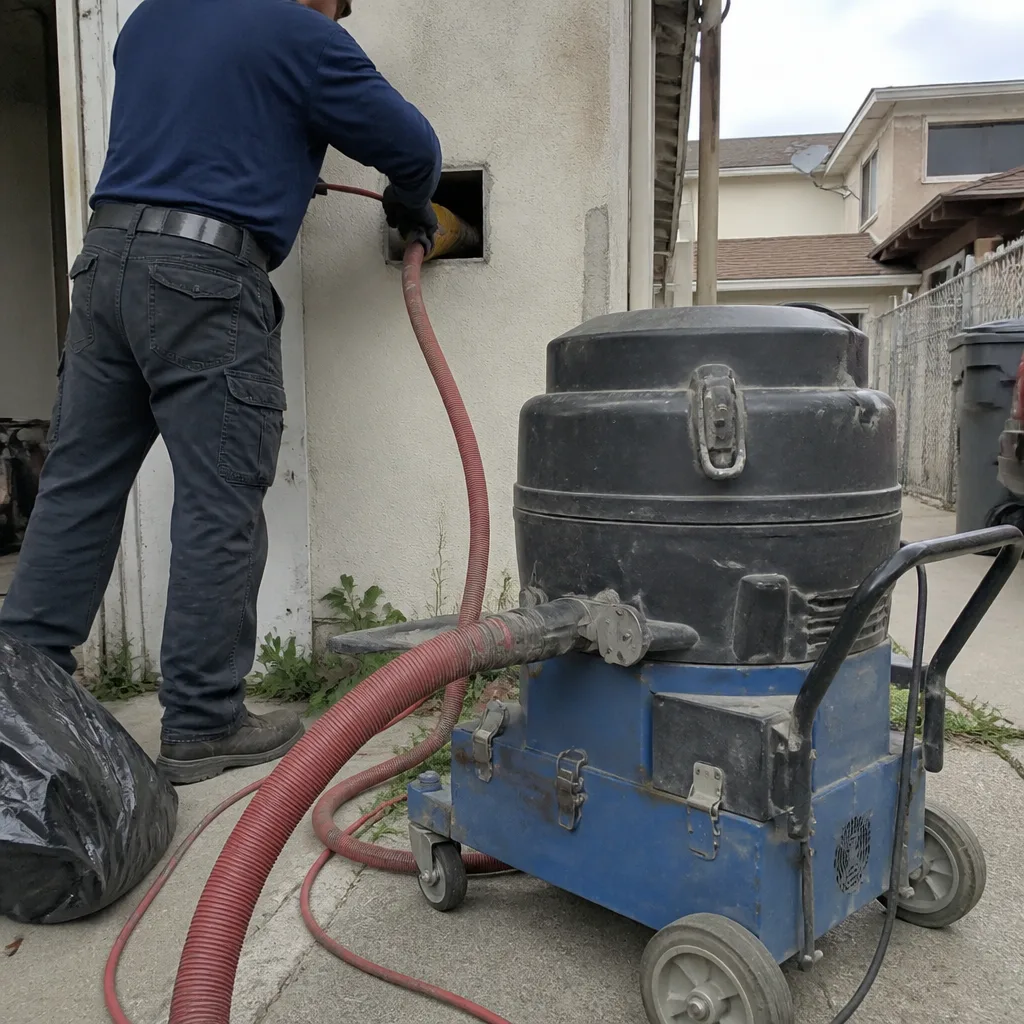
Dryer vent cleaning in South Gate homes is complicated by routing. Many older homes here have long vent runs that transition from rigid duct to flexible foil at awkward angles, and every transition is a lint collection point. A proper cleaning pushes a rotating brush through the full run from dryer to exterior termination, extracting lint rather than just poking holes through a blockage. The work should end with an airflow verification at the exterior vent cap. If the cleaning does not restore full flow, the duct itself may need repair or replacement.
This service is not an add-on. It is a fire-safety intervention that shares a toolbox with duct cleaning but addresses a separate hazard profile.
Post-Cleaning Verification: What a Real Check Looks Like
After the equipment is packed up, you need evidence that the cleaning actually happened. A visual-only check is insufficient because the human eye cannot see the finer particulate fraction, and because most homeowners cannot access the full duct run anyway.
A legitimate post-cleaning verification should include the following:
- Visual inspection access at key points: the air handler, the return plenum, and at least one supply branch accessed from the register. The surfaces should be bare metal or clean flex liner, not a thin dust film masquerading as cleaned.
- Before-and-after photos from the same access points. If a company does not offer these reflexively, ask for them. A company that photographs its own work has a standard it is willing to be held to.
- Airflow confirmation at registers. This is not a precise CFM reading without balometer equipment, but a qualitative check that each register is moving air consistent with the system’s design.
- For dryer vents, an airflow test at the exterior termination. You should be able to feel a strong, warm exhaust stream with the dryer running.
- A written summary of what was removed, what was found, and what was repaired. Not a paragraph of boilerplate. Specifics: where the access points were, what the contamination looked like, whether any ducts were damaged and how they were addressed.
If a company declines to provide before-and-after photos or a written condition summary, treat that as a red flag. The whole point of the work is verifiable source removal. If it cannot be verified, it was not a professional service.
Air Duct Repair: When Cleaning Is Not Enough
Cleaning reveals damage. It does not repair it. In South Gate homes with older duct systems, it is common to find separated joints, crushed flex sections, missing mastic, and return leaks during a cleaning. These are not cosmetic issues. A separated supply joint in an attic or chase means conditioned air is being pumped into a space you never wanted heated or cooled. A leaky return means the system is pulling whatever air is in the chase or crawlspace into your living space, unfiltered and unconditioned.
Air duct repair is the service that addresses what cleaning exposes. It can mean reconnecting separated sections, replacing degraded flex runs, sealing joints with mastic rather than tape, or rebuilding plenum connections that have worked loose over years of thermal cycling. The repair scope is determined by what the cleaning reveals, which is why we treat cleaning and repair as sequential parts of the same job when needed.
Most budget duct companies do not offer repair at all. They clean and leave, and the homeowner is left with clean ducts that still leak. We repair ducts, not just clean them. The air system is a connected pathway, and a clean but leaking duct is still a failing system.
Common Mistakes to Avoid
- Choosing a company on price alone. Duct cleaning is equipment-intensive work. Professional-grade gear costs money to own, maintain, and operate. A quote that is half the market rate in South Gate is almost always a quote from someone who does not own the equipment to do the job right.
- Accepting a per-vent price without a system total. Per-vent pricing incentivizes speed and punishes thoroughness. A written estimate that gives one flat price per system, agreed before work starts, is the standard you should hold out for.
- Letting someone clean without negative air containment. This is the single most common shortcut in the industry. If the system is not under negative pressure during agitation, you are paying to have your ducts emptied into your living room.
- Ignoring the dryer vent because the HVAC system was cleaned. Different system, different hazard. A clean furnace duct does nothing for a lint-choked dryer exhaust.
- Assuming the filter captures what the cleaning misses. The HVAC filter captures airborne particulate that passes through the blower. Duct wall deposition is a separate mechanism. Cleaning removes it; filtration does not reach it.
- Skipping the post-cleaning walkthrough. If you do not ask to see the work, you are relying on trust in an industry where verification is the only credibility that counts.
See the difference
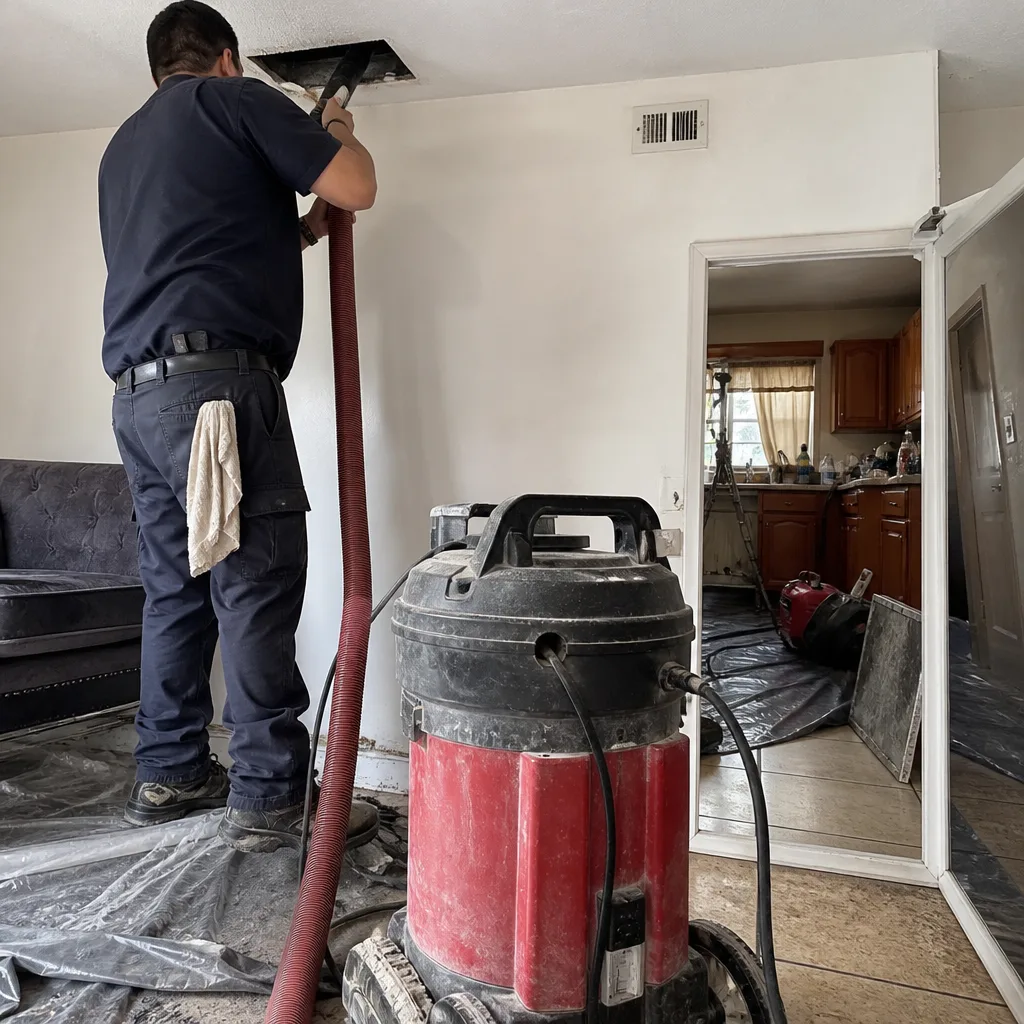 Before
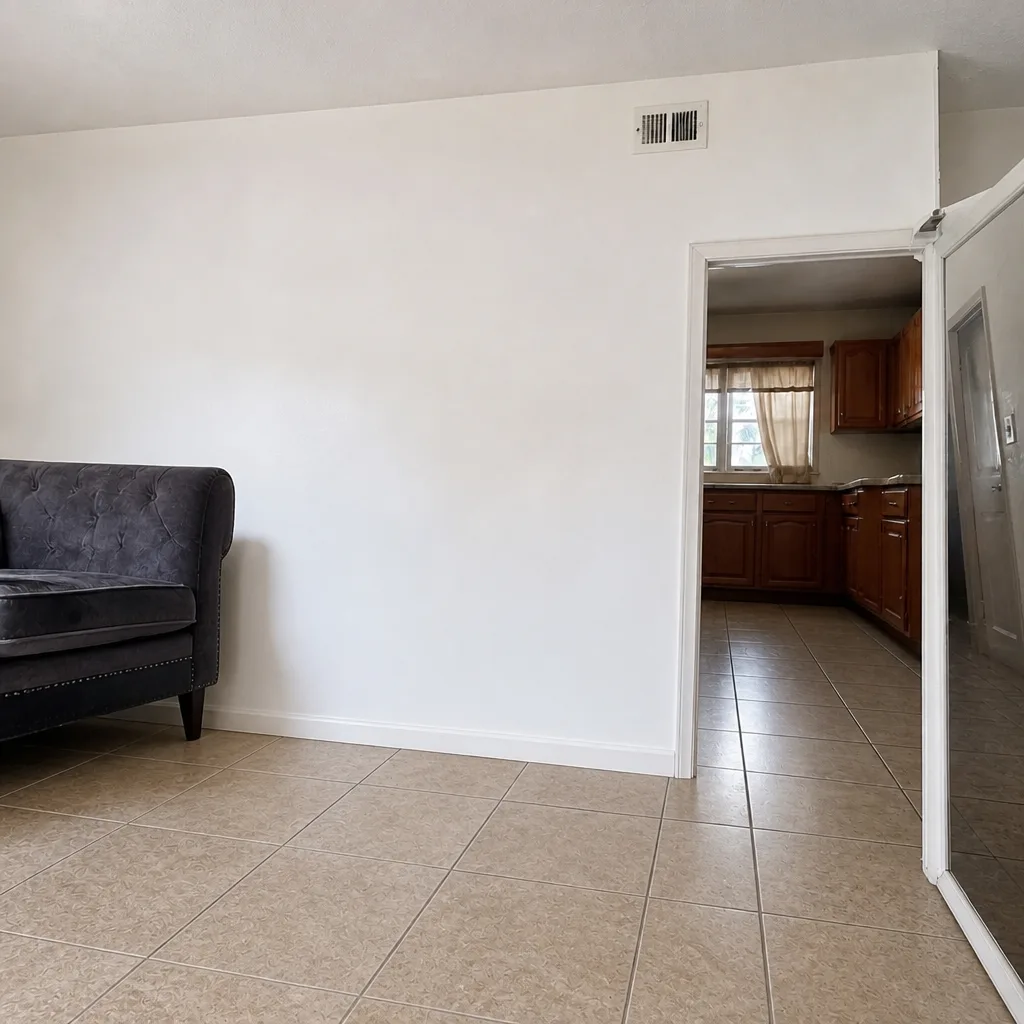 After
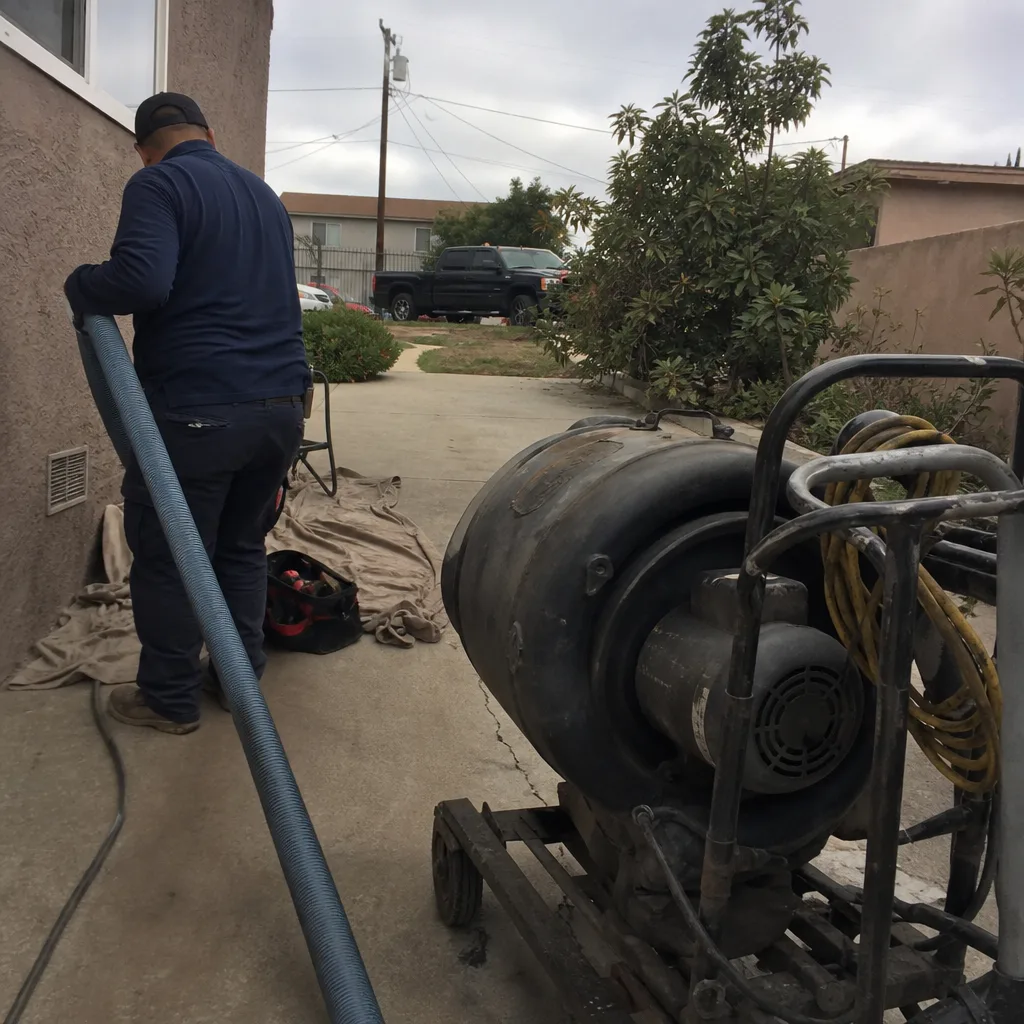 Before
 After
 Before
 After
When to Call a Professional
You should call for an inspection if you can see dust streaks on the walls near your registers, if rooms at the end of long duct runs never reach the same temperature as the rest of the house, or if you have lived in the home for years and have no record of the ducts ever being cleaned. If your dryer takes more than one full cycle to dry a normal load, the vent is restricted and should be addressed before it becomes a fire hazard. If you have renovated recently, drywall dust and demolition particulate are almost certainly in the ducts. South Gate homeowners dealing with any of these conditions should call for a professional assessment. Duct Cleaning South Gate offers free estimates in South Gate and throughout the service area. Call (855) 925-0879. We answer 24/7. Fast dispatch from 7am to 7pm, Sunday through Friday.
Frequently Asked Questions
Air duct cleaning in South Gate is priced per job, not per vent. A typical single-family home with one furnace and standard duct layout falls into an estimated range that depends on system size, accessibility, and contamination level. The written estimate you receive before work begins sets the final price, and that estimate is free. Call (855) 925-0879 for an exact quote. We answer 24/7. Fast dispatch from 7am to 7pm, Sunday through Friday.
A complete residential duct cleaning in South Gate typically runs three to six hours, depending on the number of systems, the accessibility of the ductwork, and the extent of contamination found once access is opened. Homes with older flex duct or significant repair needs will take longer. We will give you a time expectation as part of the written estimate.
Cheaper quotes usually reflect cheaper equipment. A company using a portable vacuum and an air whip is not doing source removal; they are blowing debris around and sucking up a fraction of it. Professional-grade equipment like Rotobrush brush systems, Nikro HEPA vacuums, and Abatement Technologies negative-air containment costs significant money to own and maintain. That cost gap shows up in the quote, and the capability gap shows up in the result.
Ask for before-and-after photographs from the same access points inside your ducts. The after photos should show bare metal or clean flex liner, not a lighter dust film. Ask for a written summary of what was removed and where access was made. If a company will not provide photographic verification, you cannot confirm the work, and you should not pay for it on faith alone.
There is no fixed interval that fits every home. A South Gate home with a well-sealed system, good filtration, and no pets may go five to seven years between cleanings without meaningful buildup. A home with older ducts, high occupancy, pets, or recent renovation may need attention much sooner. The first cleaning establishes your baseline. After that, inspection tells you when the next one is needed.
In most South Gate homes, yes. Access is typically made through existing register openings and the air handler cabinet. In some cases, particularly with hard-piped systems that have no register access for certain branches, small access points may need to be created and then properly sealed. We will tell you if this applies to your system before any cutting happens, and the written estimate reflects it.
The Bottom Line
Duct cleaning in South Gate is not a commodity service, even though it is often priced like one. The difference between a real clean and a surface pass is equipment, sequence, and verification. Negative air containment has to be established before agitation begins. The tool has to match the duct material. And the result has to be documented in a way you can actually see. Homes in South Gate with older construction, slab foundations, and aging flex duct have specific contamination patterns that require a source-removal approach, not a blow-and-go. If you want to understand what is moving through your air system, start with an inspection, ask about the equipment by name, and hold out for verification. The ducts in your home either got cleaned or they did not. The evidence should be visible.
Written by the team at Duct Cleaning South Gate, serving South Gate since 2013.